
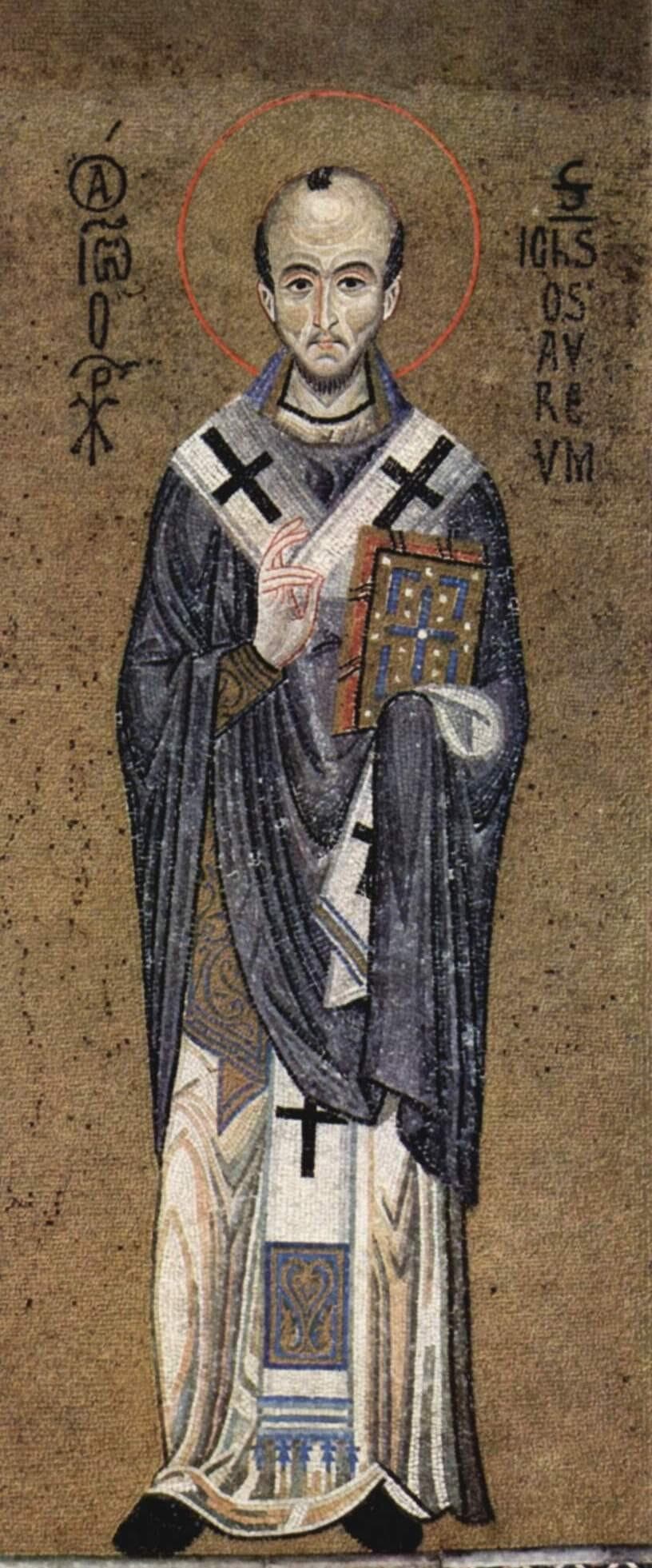
John Chrysostom
Catena Aurea · Johannesevangelium 9
But the Jews did not believe concerning him, that he had been blind, and received his sight, until they called the parents of him that had received his sight. And they asked them, saying, Is this your son, who ye say was born blind? how then doth he now see? His parents answered them and said, We know that this is our son, and that he was born blind: But by what means he now seeth, we know not; or who hath opened his eyes, we know not: he is of age; ask him: he shall speak for himself. These words spake his parents, because they feared the Jews: for the Jews had agreed already, that if any man did confess that he was Christ, he should be put out of the synagogue. Therefore said his parents, He is of age; ask him.
(Hom. lviii. 3) But it is the nature of truth, to be strengthened by the very snares that are laid against it. A lie is its own antagonist, and by its attempts to injure the truth, sets it off to greater advantage: as is the case now. For the argument which might otherwise have been urged, that the neighbours knew nothing for certain, but spoke from a mere resemblance, is cut off by introduction of the parents, who could of course testify to their own son. Having brought these before the assembly, they interrogate them with great sharpness, saying, Is this your son, (they say not, who was born blind, but) who ye say was born blind? Say. Why what father is there, that would say such things of a son, if they were not true? Why not say at once, Whom ye made blind? They try two ways of making them deny the miracle: by saying, Who ye say was born blind, and by adding, How then doth he now see?