
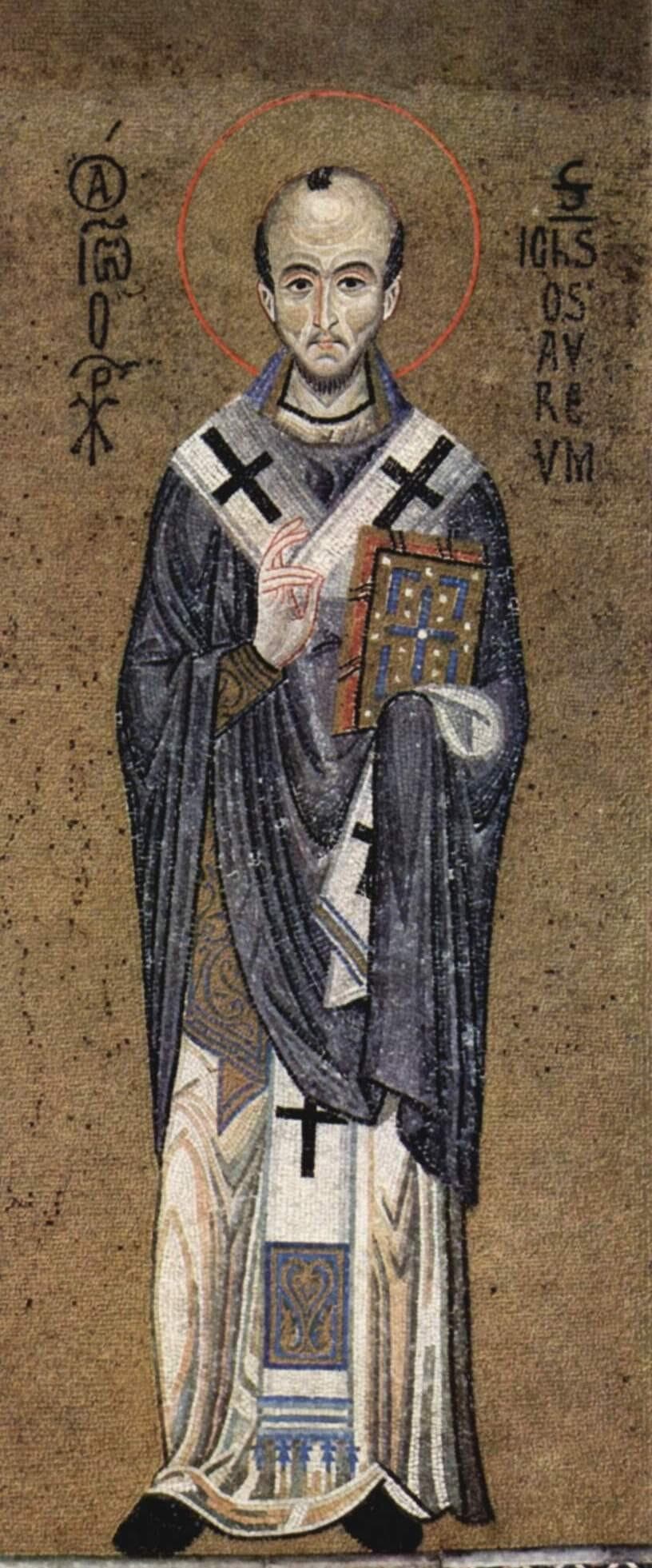
John Chrysostom
Catena Aurea · Johannesevangelium 9
The neighbours therefore, and they which before had seen him that he was blind, said, Is not this he that sat and begged? Some said, This is he: others said, He is like him: but he said, I am he. Therefore said they unto him, How were thine eyes opened? He answered and said, A man that is called Jesus made clay, and anointed mine eyes, and said unto me, Go to the pool of Siloam, and wash: and I went and washed, and I received sight. Then said they unto him, Where is he? He said, I know not. They brought to the Pharisees him that aforetime was blind. And it was the sabbath day when Jesus made the clay, and opened his eyes. Then again the Pharisees also asked him how he had received his sight. He said unto them, He put clay upon mine eyes, and I washed, and do see. Therefore said some of the Pharisees, This man is not of God, because he keepeth not the Sabbath day. Others said, How can a man that is a sinner do such miracles? And there was a division among them. They say unto the blind man again, What sayest thou of him, that he hath opened thine eyes? He said, He is a prophet.
(Hom. lvii. 2) This they said, because they were meditating His death, having already begun to conspire against Him. Christ did not appear in company with those whom He cured; having no desire forglory, or display. He always withdrew, after healing any one; in order that no suspicion might attach to the miracle. His withdrawal proved the absence of all connexion between Him and the healed; and therefore that the latter did not publish a false cure out of favour to Him. He said, I know not.