
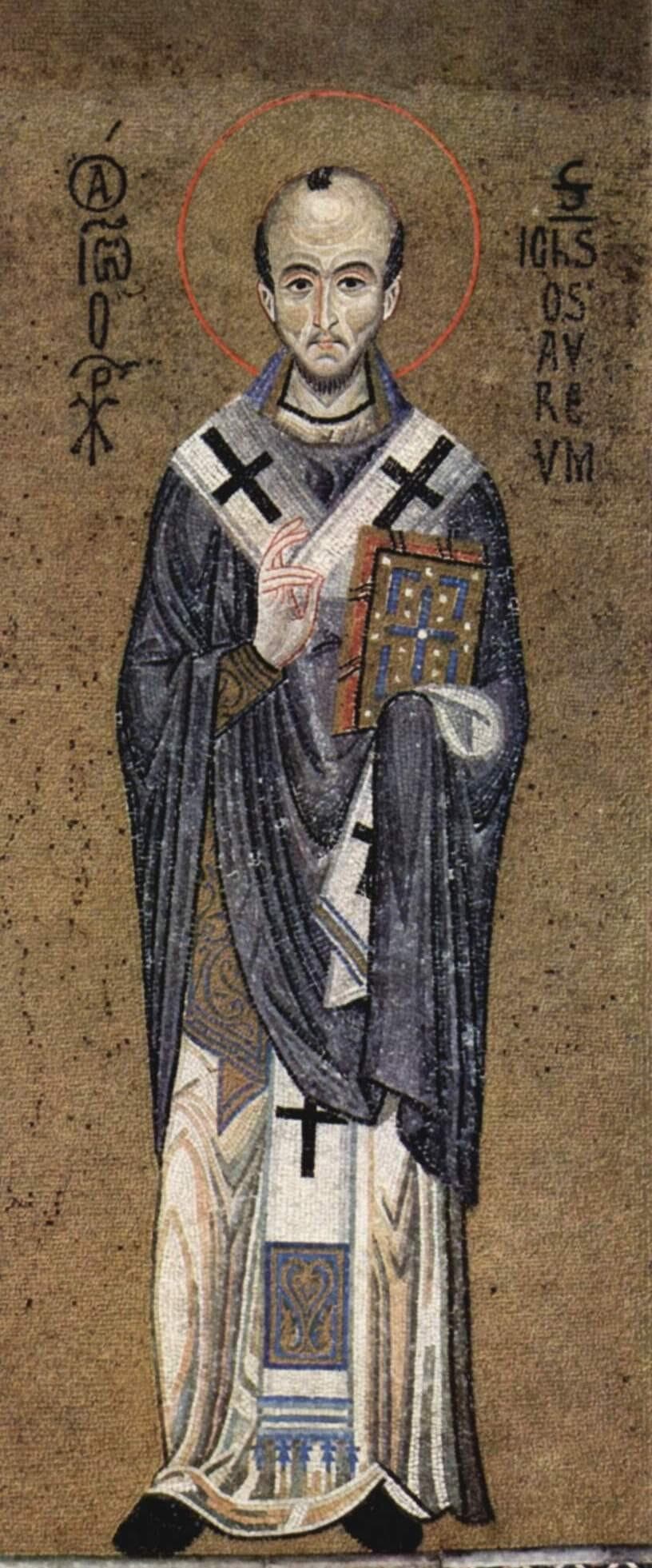
John Chrysostom
Catena Aurea · Johannesevangelium 9
And as Jesus passed by, he saw a man which was blind from his birth. And his disciples asked him, saying, Master, who did sin, this man, or his parents, that he was born blind? Jesus answered, Neither hath this man sinned, nor his parents: but that the works of God should be made manifest in him. I must work the works of him that sent me, while it is day: the night cometh, when no man can work. As long as I am in the world, I am the light of the world. When he had thus spoken, he spat on the ground, and made clay of the spittle, and he anointed the eyes of the blind man with the clay, And said unto him, Go, wash in the pool of Siloam, (which is by interpretation, Sent.) He went his way therefore, and washed, and came seeing. Jesus answered, Neither hath this man sinned, nor his parents.
(Hom. lvi. 1, 2) He is not to be understood as meaning that others had become blind, in consequence of their parents’ sins: for one man cannot be punished for the sin of another. But had the man therefore suffered unjustly? Rather I should say that that blindness was a benefit to him: for by it he was brought to see with the inward eye. At any rate He who brought him into being out of nothing, had the power to make him in the event no loser by it. Some too say, that the that here, is expressive not of the cause, but of the event, as in the passage in Romans, The law entered that sin might abound; (Rom. 5:20) the effect in this case being, that our Lord by opening the closed eye, and healing other natural infirmities, demonstrated His own power.