
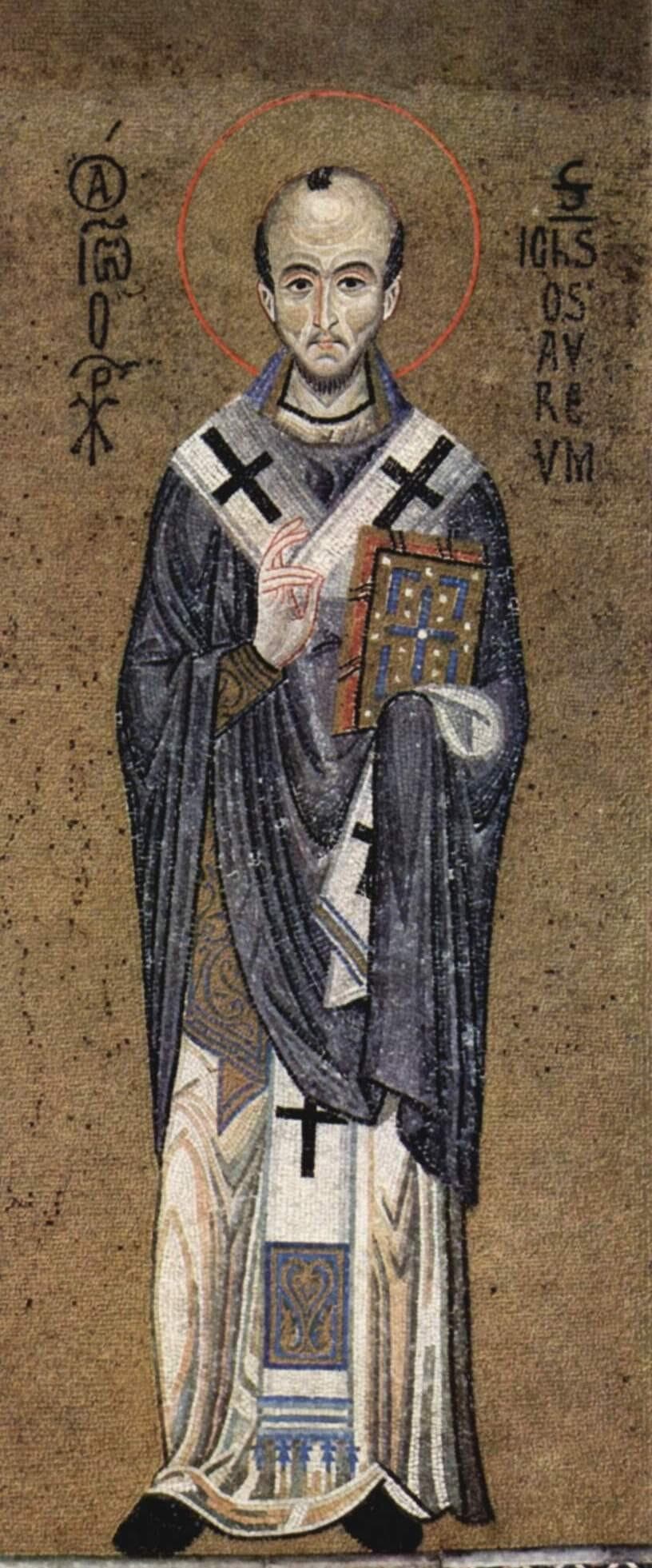
John Chrysostom
Catena Aurea · Johannesevangelium 8
Then said Jesus to those Jews which believed on him, If ye continue in my word, then are ye my disciples indeed; And ye shall know the truth, and the truth shall make you free. They answered him, We be Abraham’s seed, and were never in bondage to any man: how sayest thou, Ye shall be made free? Jesus answered them, Verily, verily, I say unto you, Whosoever committeth sin is the servant of sin. And the servant abideth not in the house for ever: but the Son abideth ever. If the Son therefore shall make you free, ye shall be free indeed. And ye shall know the truth.
(Hom. liv. 1, 2) Or thus: Having said that whosoever committeth sin, is the servant of sin, He anticipates the answer that their sacrifices saved them, by saying, The servant abideth not in the house for ever, but the Son abideth ever. The house, He says, meaning the Father’s house on high; in which, to draw a comparison from the world, He Himself had all the power, just as a man has all the power in his own house. Abideth not, means, has not the power of giving; which the Son, who is the master of the house, has. The priests of the old law had not the power of remitting sins by the sacraments of the law; for all were sinners. Even the priests, who, as the Apostle says, were obliged to offer up sacrifices for themselves. But the Son has this power; and therefore our Lord concludes: If the Son shall make you free, ye shall be free indeed; implying that that earthly freedom, of which men boasted so much, was not true freedom.