
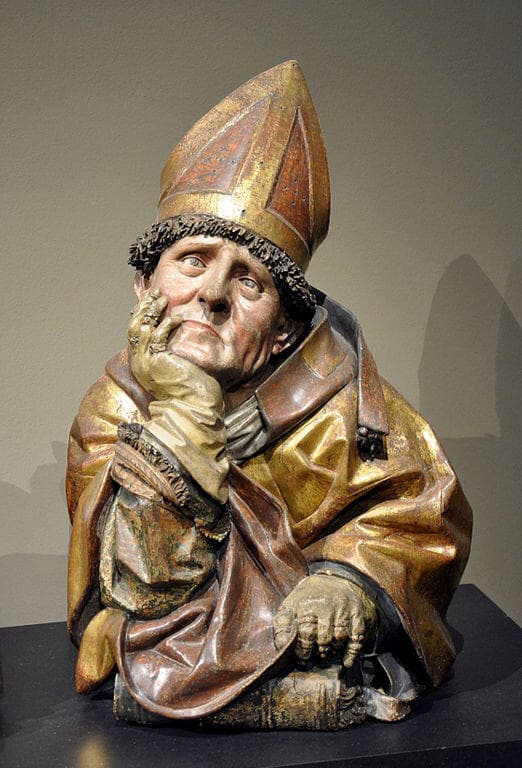
Augustine of Hippo
Catena Aurea · Johannesevangelium 8
Then said Jesus to those Jews which believed on him, If ye continue in my word, then are ye my disciples indeed; And ye shall know the truth, and the truth shall make you free. They answered him, We be Abraham’s seed, and were never in bondage to any man: how sayest thou, Ye shall be made free? Jesus answered them, Verily, verily, I say unto you, Whosoever committeth sin is the servant of sin. And the servant abideth not in the house for ever: but the Son abideth ever. If the Son therefore shall make you free, ye shall be free indeed. And ye shall know the truth.
(Tr. xli. 3) This asseveration is important: it is, if one may say so, His oath. Amen means true, but is not translated. Neither the Greek nor the Latin Translator have dared to translate it. It is a Hebrew word; and men have abstained from translating it, in order to throw a reverential veil over so mysterious aword: not that they wished to lock it up, but only to prevent it from becoming despised by being exposed. How important the word is, you may see from its being repeated. Verily I say unto you, says Verity itself; which could not be, even though it said not verily. Our Lord however has recourse to this mode of enforcing His words, in order to rouse men from their state of sleep and indifference. Whosoever, He saith, committeth sin, whether Jew or Greek, rich or poor, king or beggar, is the servant of sin.