
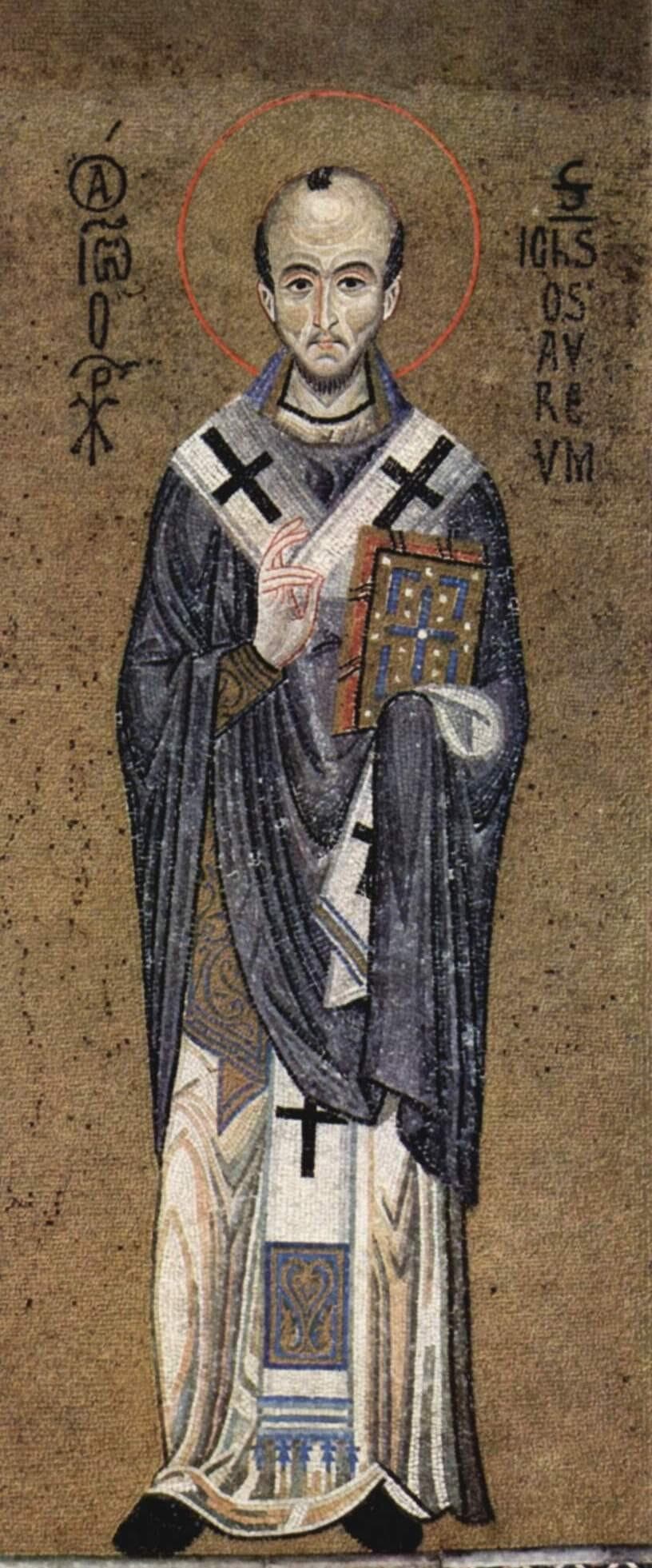
John Chrysostom
Catena Aurea · Johannesevangelium 8
The Pharisees therefore said unto him, Thou bearest record of thyself; thy record is not true. Jesus answered and said unto them, Though I bear record of myself, yet my record is true: for I know whence I came, and whither I go; but ye cannot tell whence I come, and whither I go. Ye judge after the flesh; I judge no man. And yet if I judge, my judgment is true: for I am not alone, but I and the Father that sent me. It is also written in your law, that the testimony of two men is true. I am one that bear witness of myself, and the Father that sent me beareth witness of me.
(Hom. lii. 3) It is written in your law, that the testimony of two men is true. If this is to be taken literally, in what respect does our Lord differ from men? The rule has been laid down for men, on the ground that one man alone is not to be relied on: but how can this be applicable to God? These words are quoted then with another meaning. When two men bear witness, both to an indifferent matter, their witness is true: this constitutes the testimony of two men. But if one of them bear witness to himself, then they are no longer two witnesses. Thus our Lord means to shew that He is consubstantial with the Father, and does not need another witness, i. e. besides the Father’s. I and the Father that sent Me. Again, on human principles, when a man bears witness, his honesty is supposed; he is not borne witness to; and a man is admitted as a fair and competent witness in an indifferent matter, but not in one relating to himself, unless he is supported by other testimony. But here it is quite otherwise. Our Lord, though giving testimony in His own case, and though saying that He is borne witness to by another, pronounces Himself worthy of belief; thus shewing His all-sufficiency. He says He deserves to be believed.