
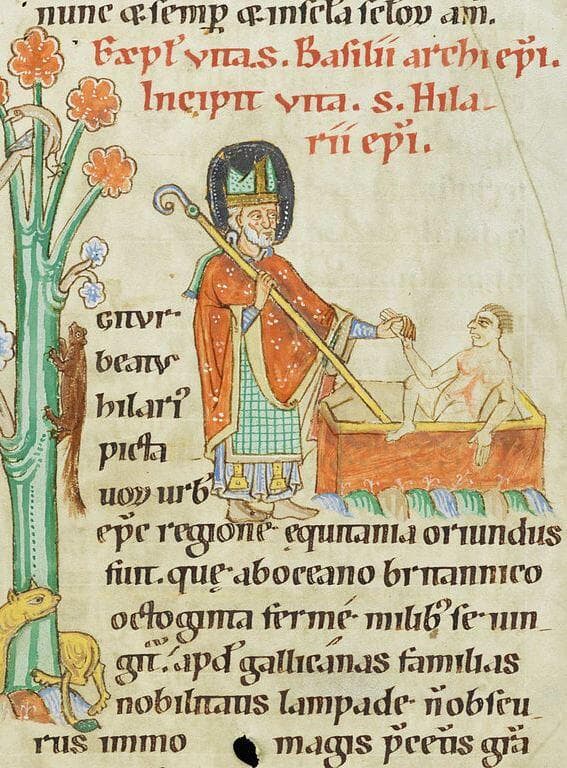
Hilary of Poitiers
Catena Aurea · Johannesevangelium 7
Then said some of them of Jerusalem, Is not this he, whom they seek to kill? But, lo, he speaketh boldly, and they say nothing unto him. Do the rulers know indeed that this is the very Christ? Howbeit we know this man whence he is: but when Christ cometh, no man knoweth whence he is. Then cried Jesus in the temple as he taught, saying, Ye both know me, and ye know whence I am: and I am not come of myself, but he that sent me is true, whom ye know not. But I know him: for I am from him, and he hath sent me. Then they sought to take him: but no man laid hands on him, because his hour was not yet come.
(de Trin. ult. med.) Every man, ever born in the flesh, is in a certain sense from God. How then could He say that they were ignorant who He was, and whence He wasa? Because our Lord is here referring to His own peculiar birth from God, which they were ignorant of, because they did not know thatHe was the Son of God. His very saying then that they did not know whence He was, was telling them whence He was. If they did not know whence He was, He could not be from nothing; for then there would be no whence to be ignorant of. He must therefore be from God. And then not knowing whence He is, was the reason that they did not know who He is. He does not know the Son who does not know His birth from the Father.