
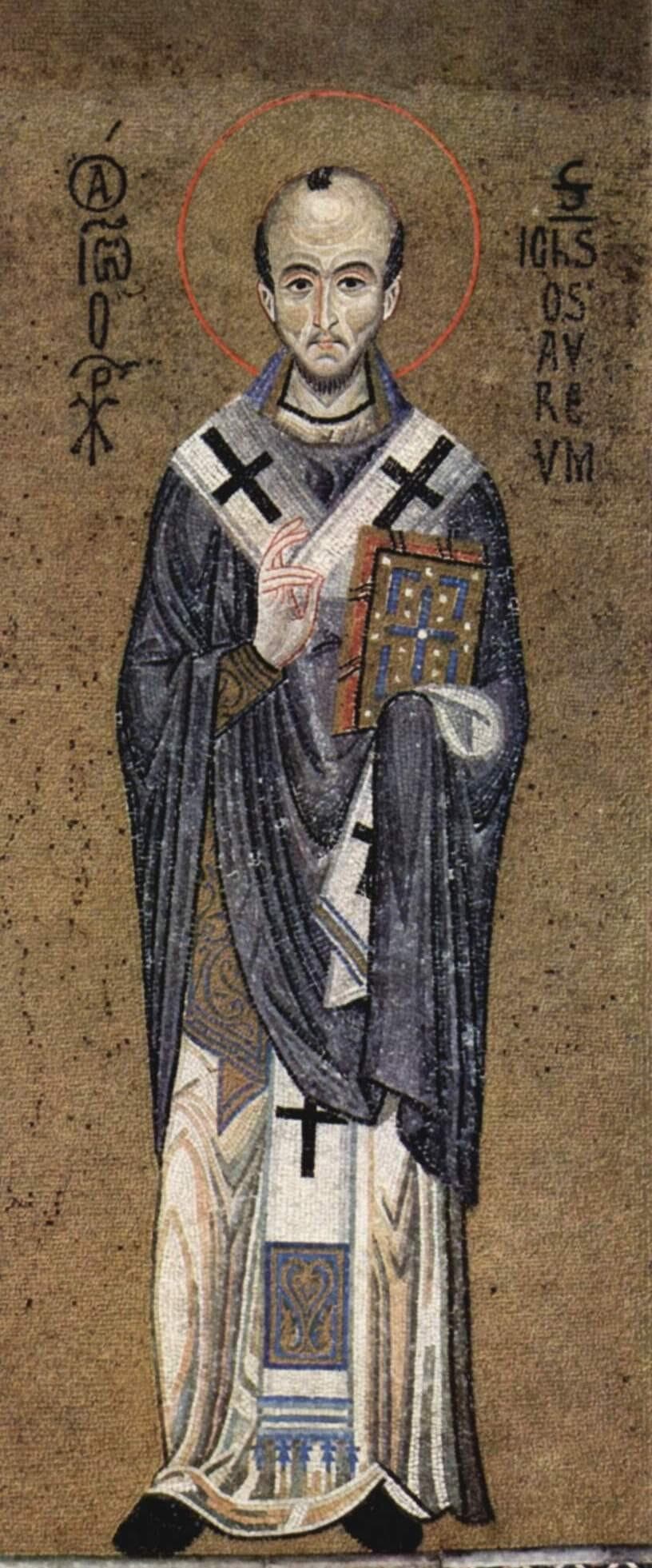
John Chrysostom
Catena Aurea · Johannesevangelium 7
After these things Jesus walked in Galilee: for he would not walk in Jewry, because the Jews sought to kill him. Now the Jews’ feast of tabernacles was at hand. His brethren therefore said unto him, Depart hence, and go into Judæa, that thy disciples also may see the works that thou doest. For there is no man that doeth any thing in secret, and he himself seeketh to be known openly. If thou do these things, shew thyself to the world. For neither did his brethren believe in him. Then Jesus said unto them, My time is not yet come: but your time is alway ready. The world cannot hate you: but me it hateth, because I testify of it, that the works thereof are evil. Go ye up unto this feast: I go not up yet unto this feast; for my time is not yet fully come.
(Hom. xlviii. 1, 2) It is striking to observe the great sincerity of the Evangelists; that they are not ashamed to mention things which appear to be to our Lord’s disadvantage, but take particular care to tell us of them. It is a considerable reflexion on our Lord, that His brethren do not believe on Him. The beginning of their speech has a friendly appearance about it: but there is much bitterness in it, thus charging Him with the motives of fear and vain glory; No man, say they, doeth any thing in secret: this was reproaching Him tacitly with fear; and was an insinuation too that His miracles had not been real and solid ones. In what follows, And he himself seeketh to be known openly, they taunt Him with the love of glory.Christ however answers them mildly, teaching us not to take the advice of people ever so inferior to ourselves angrily; Then Jesus said unto them, My time is not yet come: but your time is alway ready.