
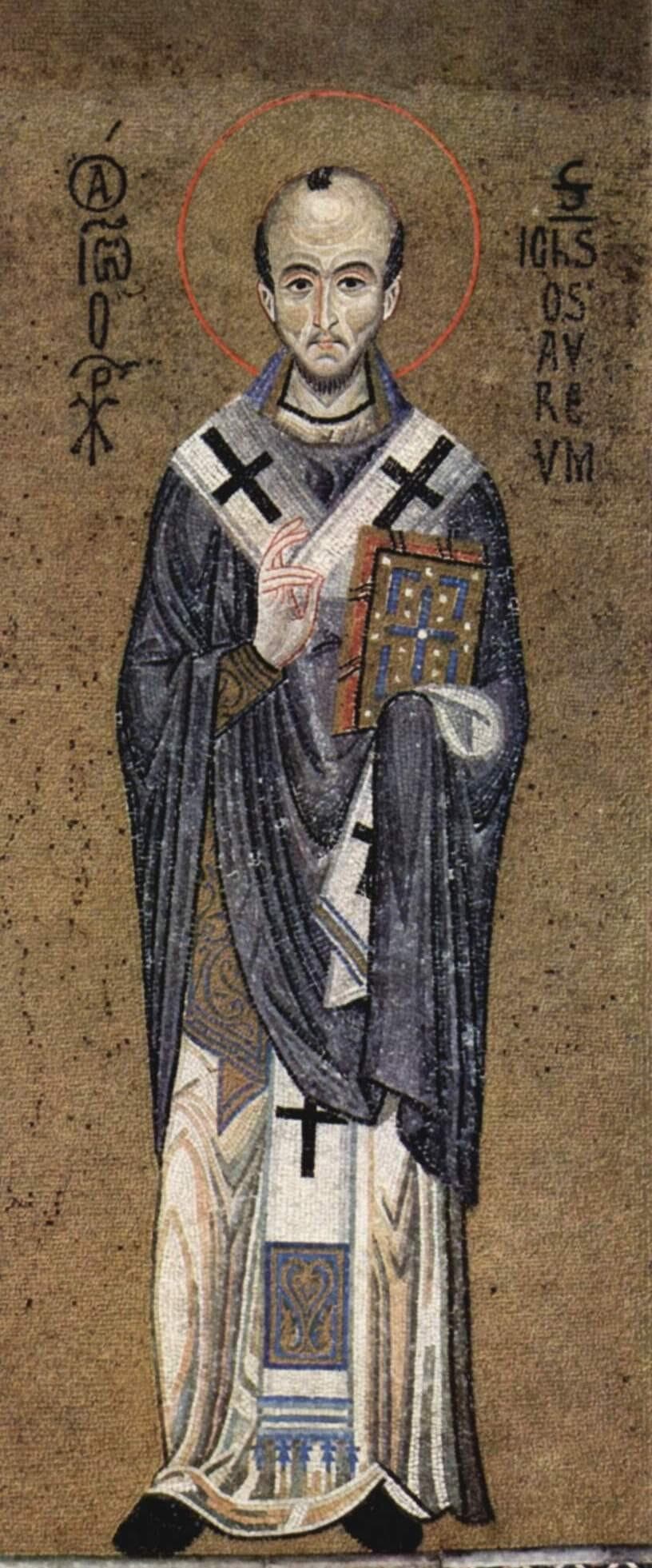
John Chrysostom
Catena Aurea · Johannesevangelium 6
Many therefore of his disciples, when they had heard this, said, This is an hard saying; who can hear it? When Jesus knew in himself that his disciples murmured at it, he said unto them, Doth this offend you? What and if ye shall see the Son of man ascend up where he was before? It is the spirit that quickeneth; the flesh profiteth nothing: the words that I speak unto you, they are spirit, and they are life. But there are some of you that believe not. For Jesus knew from the beginning who they were that believed not, and who should betray him. And he said, Therefore said I unto you, that no man can come unto me, except it were given unto him of my Father. From that time many of his disciples went back, and walked no more with him. Then said Jesus unto the twelve, Will ye also go away? Then Simon Peter answered him, Lord, to whom shall we go? thou hast the words of eternal life. And we believe and are sure that thou art that Christ, the Son of the living God. Jesus answered them, Have not I chosen you twelve, and one of you is a devil? He spake of Judas Iscariot the son of Simon: for he it was that should betray him, being one of the twelve. And from that time many of the disciples went back, and walked no more with Him.
(Hom. xlvii. 3) Peter however having said, We believe, our Lord excepts Judas from the number of those who believed: Jesus answered them, Have not I chosen you twelve, and one of you is a devil? i. e. Do not suppose that, because you have followed Me, I shall not reprove the wicked among you. It is worth enquiring, why the disciples say nothing here, whereas afterwards they ask in fear, Lord, is it I? (Matt. 26:22) But Peter had not yet been told, Get thee behind Me, Satan; (Mat. 16:23) and therefore had as yet no fear of this sort. Our Lord however does not say here, One of you shall betray Me, but, is a devil: so that they did not know what the speech meant, and thought that it was only a case of wickedness in general, that He was reproving. The Gentiles on the subject of election blame Christ foolishly. His election does not impose any necessity upon the person with respect to the future, but leaves it in the power of His will to be saved or perish.