
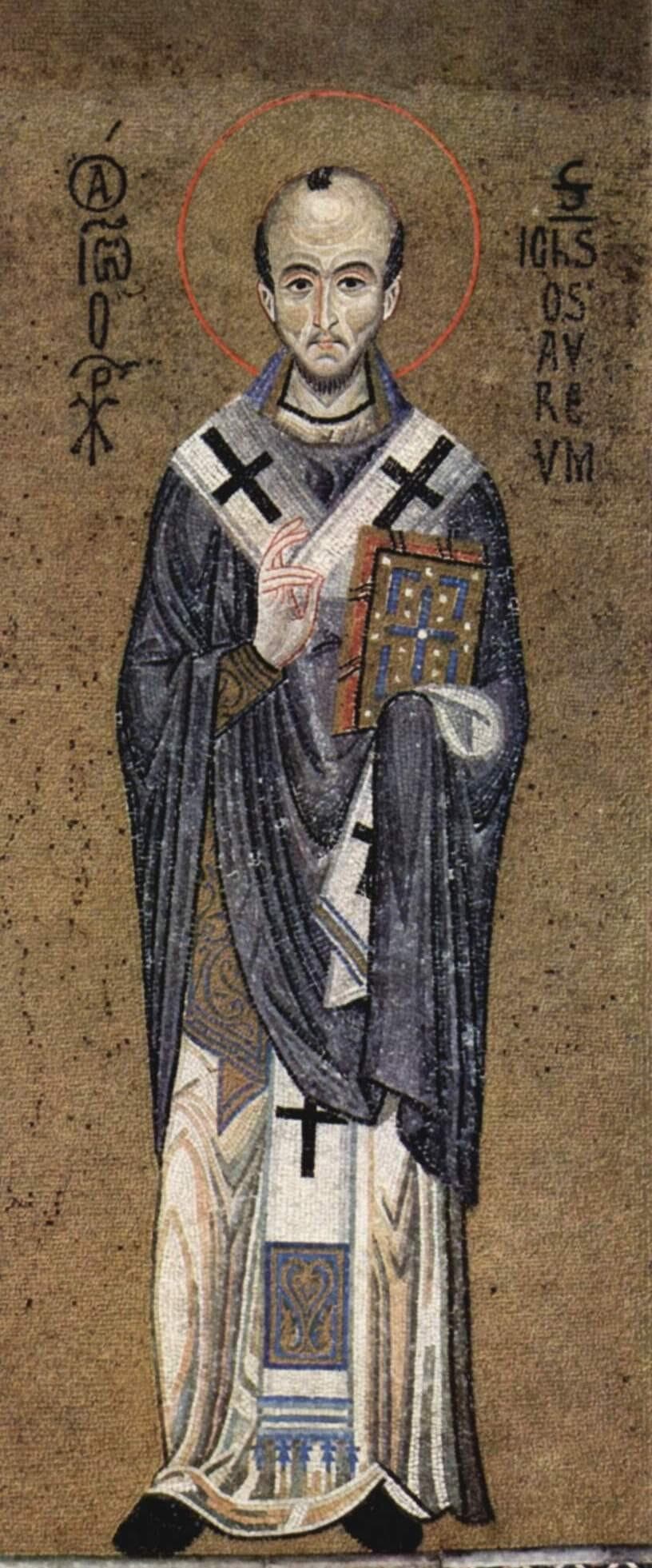
John Chrysostom
Catena Aurea · Johannesevangelium 6
Many therefore of his disciples, when they had heard this, said, This is an hard saying; who can hear it? When Jesus knew in himself that his disciples murmured at it, he said unto them, Doth this offend you? What and if ye shall see the Son of man ascend up where he was before? It is the spirit that quickeneth; the flesh profiteth nothing: the words that I speak unto you, they are spirit, and they are life. But there are some of you that believe not. For Jesus knew from the beginning who they were that believed not, and who should betray him. And he said, Therefore said I unto you, that no man can come unto me, except it were given unto him of my Father. From that time many of his disciples went back, and walked no more with him. Then said Jesus unto the twelve, Will ye also go away? Then Simon Peter answered him, Lord, to whom shall we go? thou hast the words of eternal life. And we believe and are sure that thou art that Christ, the Son of the living God. Jesus answered them, Have not I chosen you twelve, and one of you is a devil? He spake of Judas Iscariot the son of Simon: for he it was that should betray him, being one of the twelve. And from that time many of the disciples went back, and walked no more with Him.
(Hom. xlvii. 3) This was the right way to retain them. Had He praised them, they would naturally, as men do, have thought that they were conferring a favour upon Christ, by not leaving Him: by shewing, as He did, that He did not need their company, He made them hold the more closely by Him. He does not say, however, Go away, as this would have been to cast them off, but asks whether they wished to go away; thus preventing their staying with Him from any feeling of shame or necessity: for to stay from necessity would be the same as going away. Peter, who loved his brethren, replies for the whole number, Lord, to whom shall we go?