
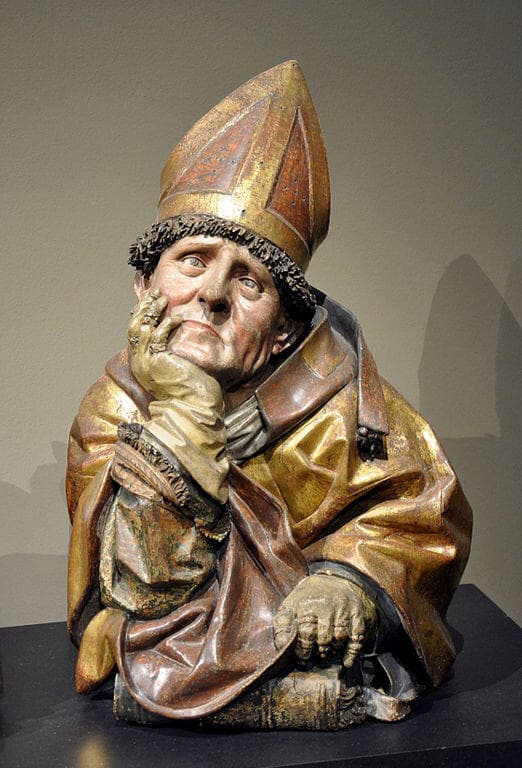
Augustine of Hippo
Catena Aurea · Johannesevangelium 6
Verily, verily, I say unto you, He that believeth on me hath everlasting life. I am that bread of life. Your fathers did eat manna in the wilderness, and are dead. This is the bread which cometh down from heaven, that a man may eat thereof, and not die. I am the living bread which came down from heaven: if any man eat of this bread, he shall live for ever.
(Tr. xxvi. 11) But are we, who eat the bread that cometh down from heaven, relieved from death? From visible and carnal death, the death of the body, we are not: we shall die, even as they died. But from spiritual death which their fathers suffered, we are delivered. Moses and many acceptable of God, eat the manna, and died not, because they understood that visible food in a spiritual sense, spiritually tasted it, and were spiritually filled with it. And we too at this day receive the visible food; but the Sacrament is one thing, the virtue of the Sacrament another. Many a one receiveth from the Altar, and perisheth in receiving; eating and drinking his own damnation, (1 Cor. 11:29) as saith the Apostle. To eat then the heavenly bread spiritually, is to bring to the Altar an innocent mind. Sins, though they be daily, are not deadly. Before you go to the Altar, attend to the prayer you repeat: Forgive us our debts, as we forgiveour debtors. (Matt. 6:12) If thou forgivest, thou art forgiven: approach confidently; it is bread, not poison. None then that eateth of this bread, shall die. But we speak of the virtue of the Sacrament, not the visible Sacrament itself; of the inward, not of the outward eater.