
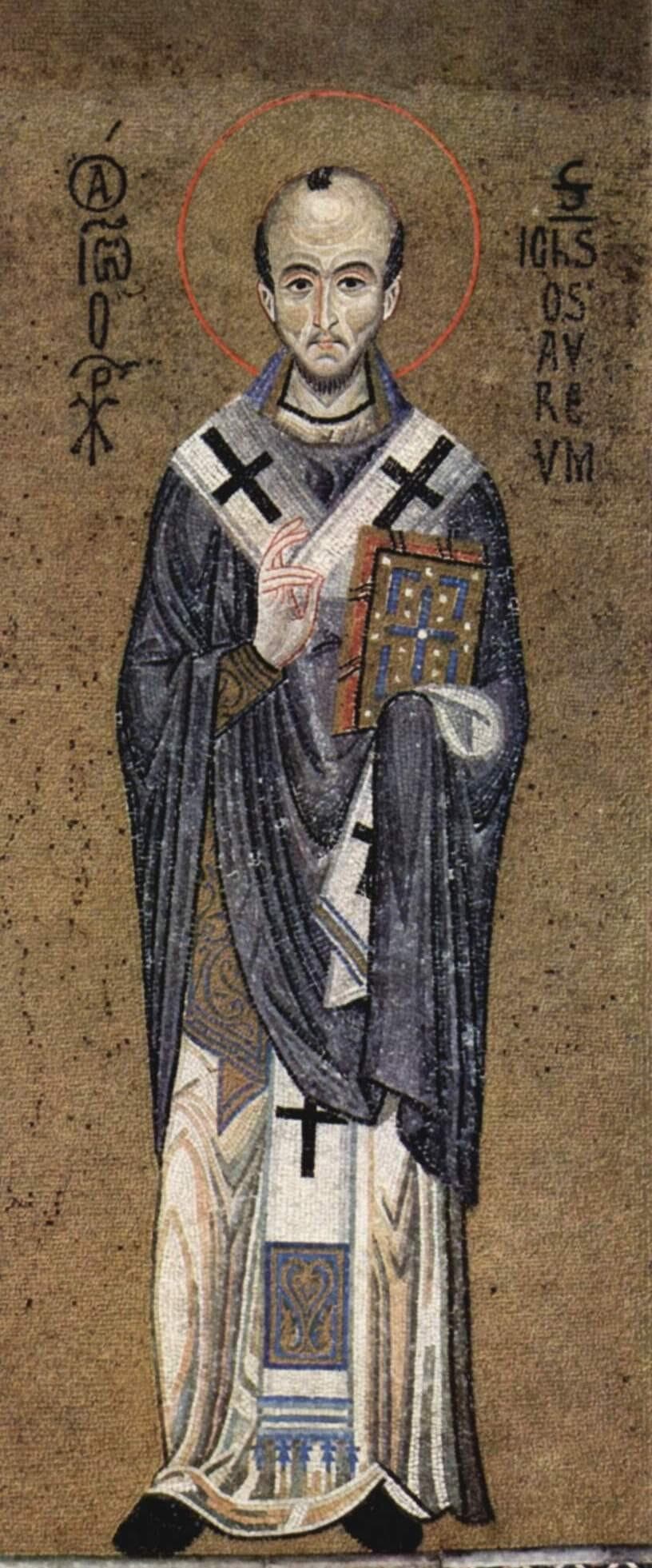
John Chrysostom
Catena Aurea · Johannesevangelium 5
If I bear witness of myself, my witness is not true. There is another that beareth witness of me; and I know that the witness which he witnesseth of me is true. Ye sent unto John, and he bare witness unto the truth. But I receive not testimony from man: but these things I say, that ye might be saved. He was a burning and a shining light: and ye were willing for a season to rejoice in his light. But I have greater witness than that of John: for the works which the Father hath given me to finish, the same works that I do, bear witness of me, that the Father hath sent me. And the Father himself, which hath sent me, hath borne witness of me. Ye have neither heard his voice at any time, nor seen his shape. And ye have not his word abiding in you: for whom he hath sent, him ye believe not. Search the Scriptures; for in them ye think ye have eternal life: and they are they which testify of me. And ye will not come to me, that ye might have life.
(Hom. xl. 3) How then says Moses, Ask—whether there hath been any such thing as this great thing is: did ever people hear the voice of God, speaking out of the midst of the fire, as thou hast heard and seen? (Deut. 4:32, 33) Isaiah too, and many others, are said to have seen Him. So what does Christ mean here? He means to impress upon them the philosophical doctrine, that God has neither voice, or appearance, or shape; but is superior to such modes of speaking of Him. For as in saying, Ye have never heard His voice, He does not mean to say that He has a voice, only not an audible one to them; so when He says, Nor have even His shape, no tangible, sensible, or visible shape is implied to belong to God: but all such mode of speaking is pronounced inapplicable to God.