
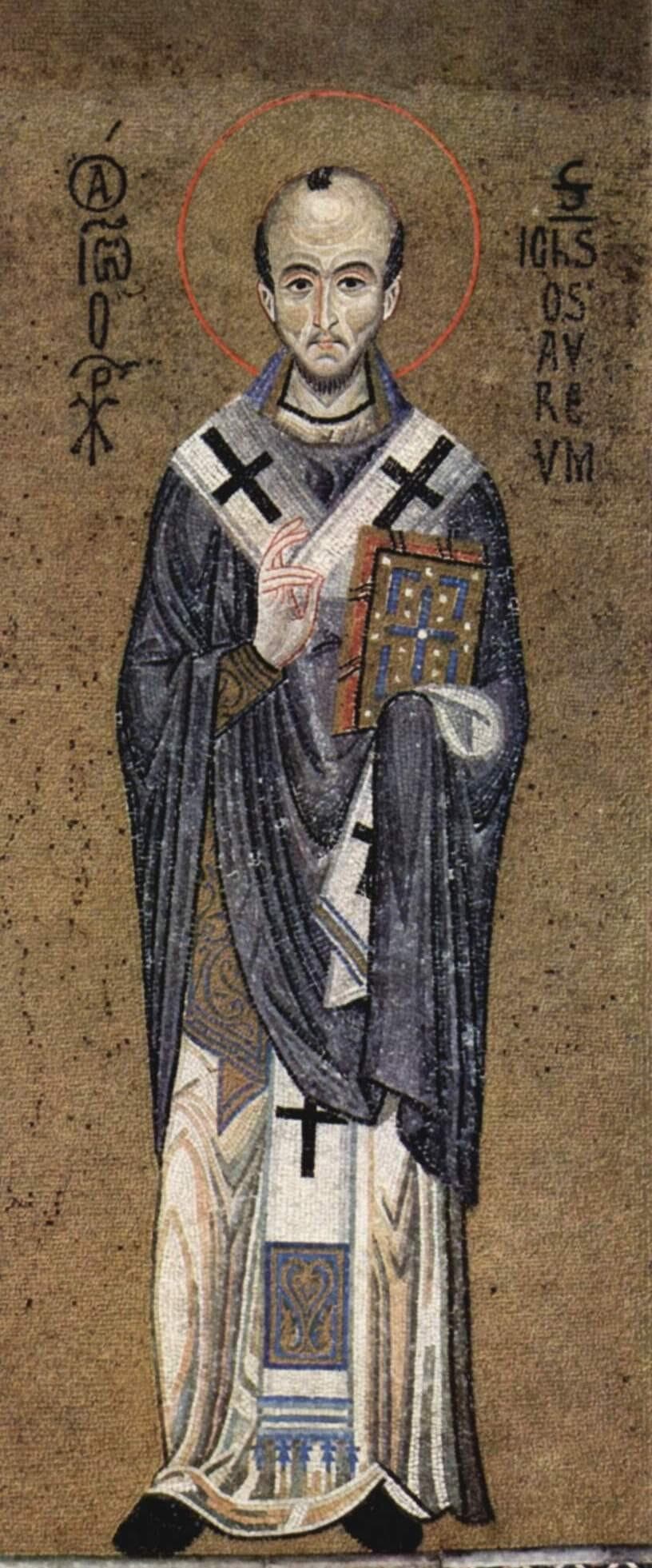
John Chrysostom
Catena Aurea · Johannesevangelium 5
If I bear witness of myself, my witness is not true. There is another that beareth witness of me; and I know that the witness which he witnesseth of me is true. Ye sent unto John, and he bare witness unto the truth. But I receive not testimony from man: but these things I say, that ye might be saved. He was a burning and a shining light: and ye were willing for a season to rejoice in his light. But I have greater witness than that of John: for the works which the Father hath given me to finish, the same works that I do, bear witness of me, that the Father hath sent me. And the Father himself, which hath sent me, hath borne witness of me. Ye have neither heard his voice at any time, nor seen his shape. And ye have not his word abiding in you: for whom he hath sent, him ye believe not. Search the Scriptures; for in them ye think ye have eternal life: and they are they which testify of me. And ye will not come to me, that ye might have life.
(Hom. xl. 1) He now brings proof of those high declarations respecting Himself. He answers an objection: If I bear witness of Myself, My witness is not true. These are Christ’s own words. But does not Christ in many places bear witness of Himself? And if all this is false, where is our hope of salvation? Whence shall we obtain truth, when the Truth Itself says, My witness is not true. We must believe then that true, here, is said, not with reference to the intrinsic value of His testimony, but to their suspicions; for the Jews might say, We do not believe Thee, because no one who bears witness to himself is to be depended on. In answer then, he puts forth three clear and irrefragable proofs, three witnesses as it were, to the truth of what He had said; the works which He had done, the testimony of the Father, and the preaching of John: putting the least of these foremost, i. e. the preaching of John: There is another that beareth witness of Me: and I know that the witness which he witnesseth of Me is true.