
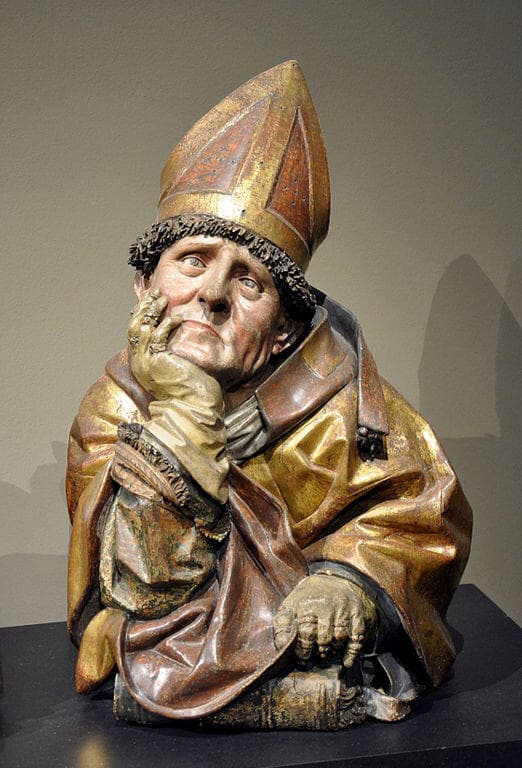
Augustine of Hippo
Catena Aurea · Johannesevangelium 5
For as the Father raiseth up the dead, and quickeneth them; even so the Son quickeneth whom he will. For the Father judgeth no man, but hath committed all judgment unto the Son: That all men should honour the Son, even as they honour the Father. He that honoureth not the Son honoureth not the Father which hath sent him.
(Tr. xxi. s. 11.) But who are these dead, whom the Father and Son raise to life? He alludes to the general resurrection which is to be; not to the resurrection of those few, who were raised to life, that the rest might believe; as Lazarus, who rose again, to die afterwards. Having said then, For as the Father raiseth up the dead, and quickeneth them, to prevent our taking the words to refer to the dead whom He raised up for the sake of the miracle, and not to the resurrection to life eternal, He adds, For the Father judgeth no man; thus shewing that He spoke of that resurrection of the dead which would take place at the judgment. (Tr. xxiii. s. 13). Or the words, As the Father raiseth up the dead, &c.refer to the resurrection of the soul; For the Father judgeth no man, but hath committed all judgment unto the Son, to the resurrection of the body. For the resurrection of the soul takes place by the substance of the Father and the Sonk, and therefore it is the work of the Father and the Son together: but the resurrection of the body takes place by a dispensation of the Son’s humanity, which is a temporal dispensation, and not coeternal with the Father. (Tr. xxi. s. 12.). But see how the Word of Christ leads the mind in different directions, not allowing it any carnal resting place; but by variety of motion exercising it, by exercise purifying it, by purifying enlarging its capacity, and after enlarging filling it. He said just before that the Father shewed what things soever He did to the Son. So I saw, as it were, the Father working, and the Son waiting: now again I see the Son working, the Father resting.