
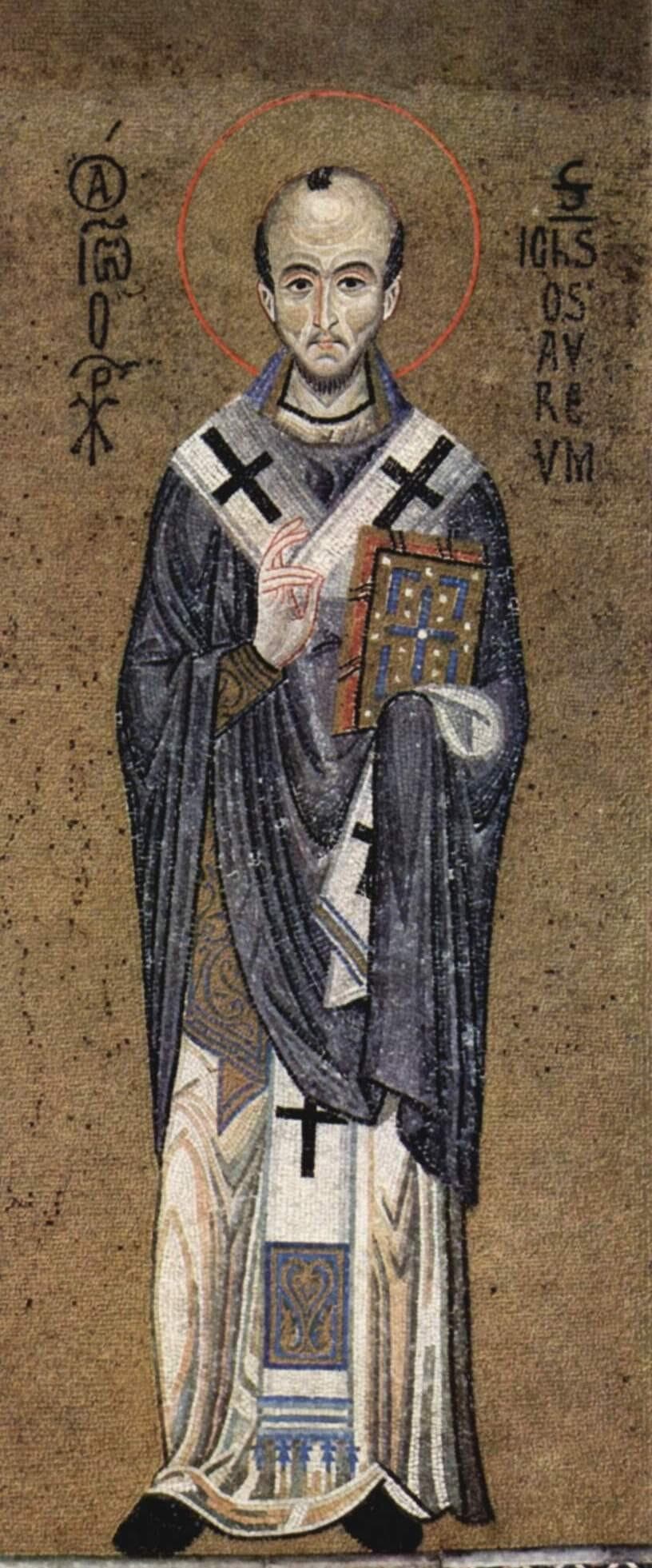
John Chrysostom
Catena Aurea · Johannesevangelium 5
Afterward Jesus findeth him in the temple, and said unto him, Behold, thou art made whole: sin no more, lest a worse thing come unto thee. The man departed, and told the Jews that it was Jesus, which had made him whole. And therefore did the Jews persecute Jesus, and sought to slay him, because he had done these things on the sabbath day. But Jesus answered them, My Father worketh hitherto, and I work. Therefore the Jews sought the more to kill him, because he not only had broken the sabbath, but said also that God was his Father, making himself equal with God. And (He) said unto him, Behold, thou art made whole; sin no more, lest a worse thing come upon thee.
(Hom. xxxviii. s. 3) Were He not the Son by nature, and of the same substance, this defence would be worse than the former accusation made. For no prefect could clear Himself from a transgression of the king’s law, by urging that the king broke it also. But, on the supposition of the Son’s equality to the Father, the defence is valid. It then follows, that as the Father worked on the Sabbath without doing wrong: the Son could do so likewise.