
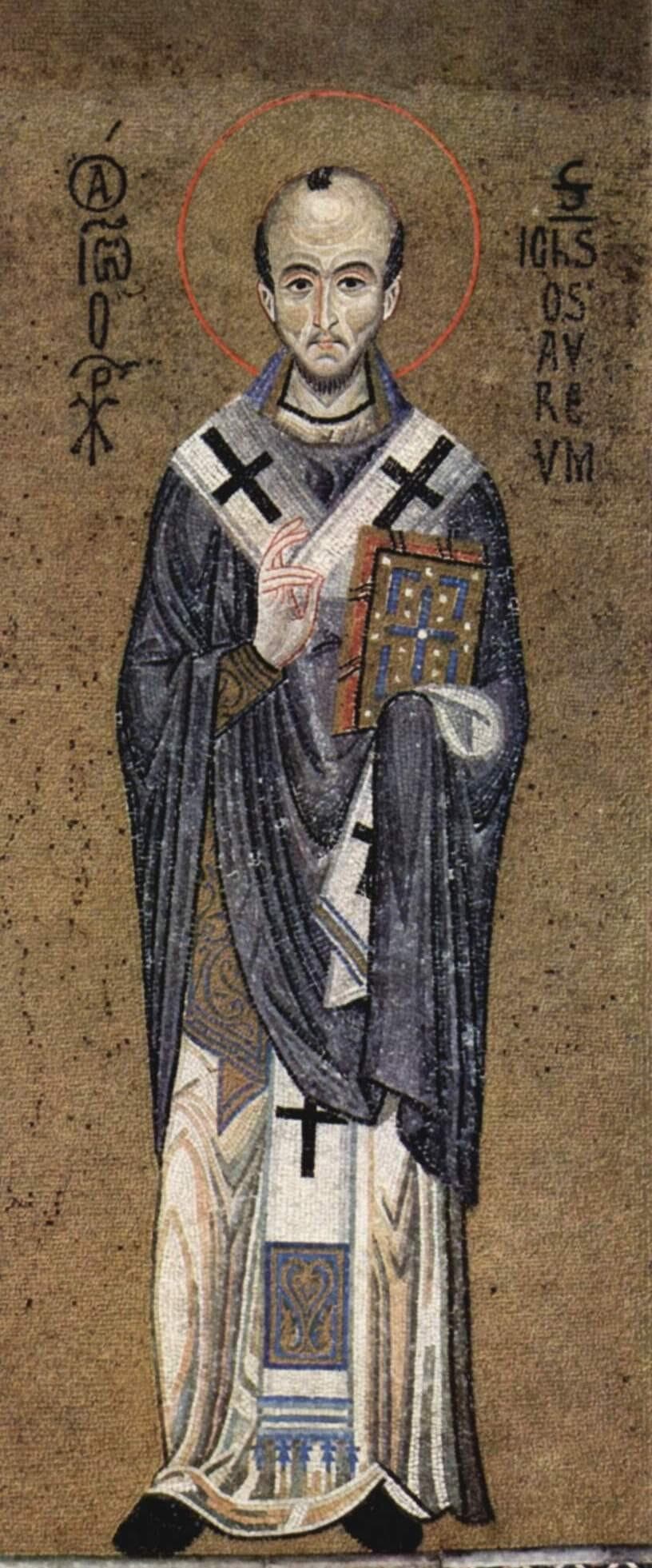
John Chrysostom
Catena Aurea · Johannesevangelium 5
After this there was a feast of the Jews; and Jesus went up to Jerusalem. Now there is at Jerusalem by the sheep market a pool, which is called in the Hebrew tongue Bethesda, having five porches. In these lay a great multitude of impotent folk, of blind, halt, withered, waiting for the moving of the water. For an angel went down at a certain season into the pool, and troubled the water: whosoever then first after the troubling of the water stepped in, was made whole of whatsoever disease he had. And a certain man was there, which had an infirmity thirty and eight years. When Jesus saw him lie, and knew that he had been now a long time in that case, he saith unto him, Wilt thou be made whole? The impotent man answered him, Sir, I have no man, when the water is troubled, to put me into the pool: but while I am coming, another steppeth down before me. Jesus saith unto him, Rise, take up thy bed, and walk. And immediately the man was made whole, and took up his bed, and walked: and on the same day was the sabbath. The Jews therefore said unto him that was cured, It is the sabbath day: it is not lawful for thee to carry thy bed. He answered them, He that made me whole, the same said unto me, Take up thy bed, and walk. Then asked they him, What man is that which said unto thee, Take up thy bed, and walk? And he that was healed wist not who it was: for Jesus had conveyed himself away, a multitude being in that place. Now there is at Jerusalem by the sheep-market a pool, which is called in the Hebrew tongue Bethesda, having five porches.
(Hom. xxxvii. 2) Had he been inclined to deal treacherously, he might have said, If it is a crime, accuse Him Who commanded it, and I will lay down my bed. And he would have concealed his cure, knowing, as he did, that their real cause of offence was not the breaking of the Sabbath, but the miracle. But he neither concealed it, nor asked for pardon, but boldly confessed the cure. They then ask spitefully; What man is that who said unto thee, Take up thy bed, and walk. They do not say, Who is it, who made thee whole? but only mention the offence. It follows, And he that was healed wist not who it was, for Jesus had conveyed Himself away, a multitude being in that place. This He had done first, because the man whohad been made whole, was the best witness of the cure, and could give his testimony with less suspicion in our Lord’s absence; and secondly, that the fury of men might not be excited more than was necessary. For the mere sight of the object of envy, is no small incentive to envy. For these reasons He departed, and left them to examine the fact for themselves. Some are of opinion, that this is the same with the one who had the palsy, whom Matthew mentions. But he is not. For the latter had many to wait upon, and carry him, whereas this man had none. And the place where the miracle was performed, is different.