
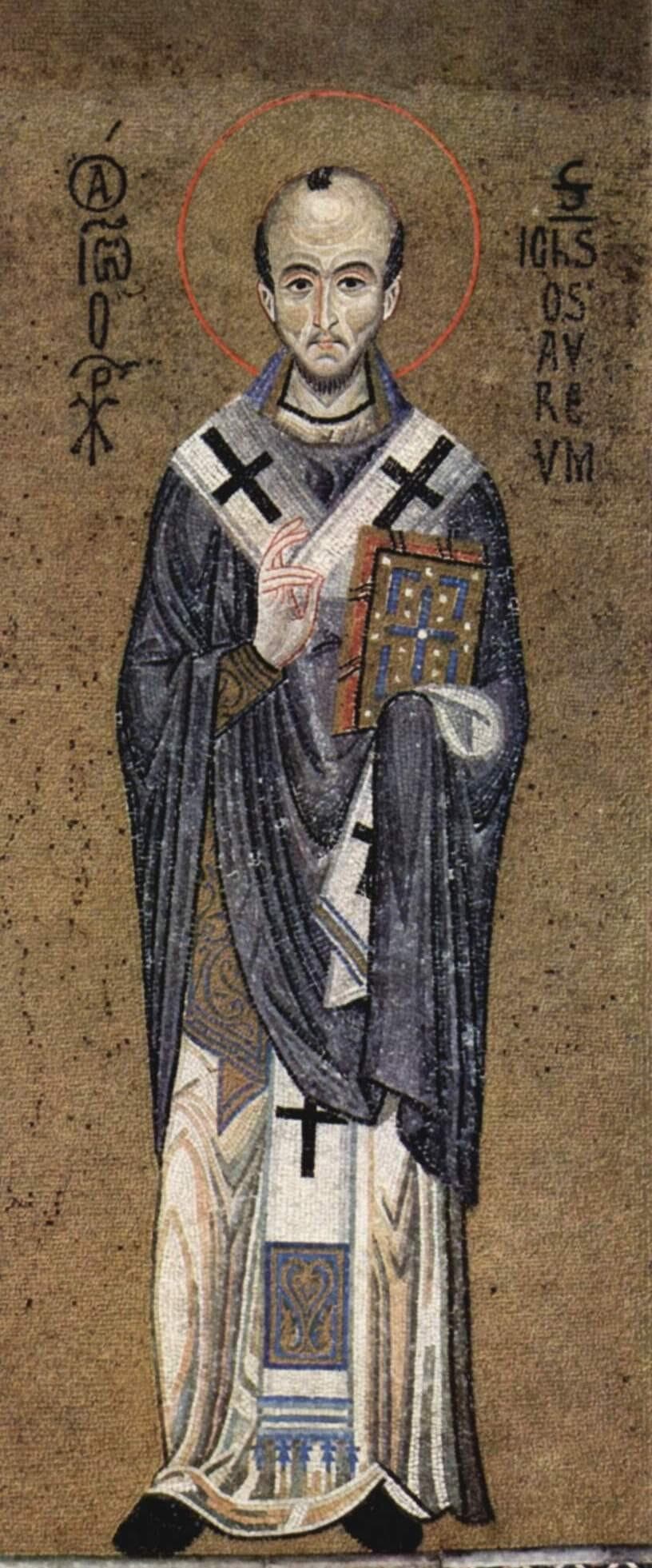
John Chrysostom
Catena Aurea · Johannesevangelium 5
After this there was a feast of the Jews; and Jesus went up to Jerusalem. Now there is at Jerusalem by the sheep market a pool, which is called in the Hebrew tongue Bethesda, having five porches. In these lay a great multitude of impotent folk, of blind, halt, withered, waiting for the moving of the water. For an angel went down at a certain season into the pool, and troubled the water: whosoever then first after the troubling of the water stepped in, was made whole of whatsoever disease he had. And a certain man was there, which had an infirmity thirty and eight years. When Jesus saw him lie, and knew that he had been now a long time in that case, he saith unto him, Wilt thou be made whole? The impotent man answered him, Sir, I have no man, when the water is troubled, to put me into the pool: but while I am coming, another steppeth down before me. Jesus saith unto him, Rise, take up thy bed, and walk. And immediately the man was made whole, and took up his bed, and walked: and on the same day was the sabbath. The Jews therefore said unto him that was cured, It is the sabbath day: it is not lawful for thee to carry thy bed. He answered them, He that made me whole, the same said unto me, Take up thy bed, and walk. Then asked they him, What man is that which said unto thee, Take up thy bed, and walk? And he that was healed wist not who it was: for Jesus had conveyed himself away, a multitude being in that place. Now there is at Jerusalem by the sheep-market a pool, which is called in the Hebrew tongue Bethesda, having five porches.
(Hom. xxxiii. 1, 2) He did not, however, proceed immediately to heal him, but first tried by conversation to bring him into a believing state of mind. Not that He required faith in the first instance, as He did from the blind man, saying, Believe ye that I am able to do this? (Matt. 9:28) for the lame man could not well know who He was. Persons who in different ways had had the means of knowing Him, were asked this question, and properly so. But there were some who did not and could not know Him yet, but would be made to know Him by His miracles afterwards. And in their case the demand for faith is reserved till after those miracles have taken place: When Jesus saw him lie, and knew that he had been a long time inthat case, He saith unto him, Wilt thou be made whole? He does not ask this question for His own information, (this were unnecessary,) but to bring to light the great patience of the man, who for thirty and eight years had sat year after year by the place, in the hope of being cured; which sufficiently explains why Christ passed by the others, and went to him. And He does not say, Dost thou wish Me to heal thee? for the man had not as yet any idea that He was so great a Person. Nor on the other hand did the lame man suspect any mockery in the question, to make him take offence, and say, Hast thou come to vex me, by asking me if I would be made whole; but he answered mildly, Sir, I have no man, when the water is troubled, to put me into the pool; but while I am coming, another steppeth down before me. He had no idea as yet that the Person who put this question to him would heal him, but thought that Christ might probably be of use in putting him into the water. But Christ’s word is sufficient, Jesus saith unto him, Rise, take up thy bed, and walk.