
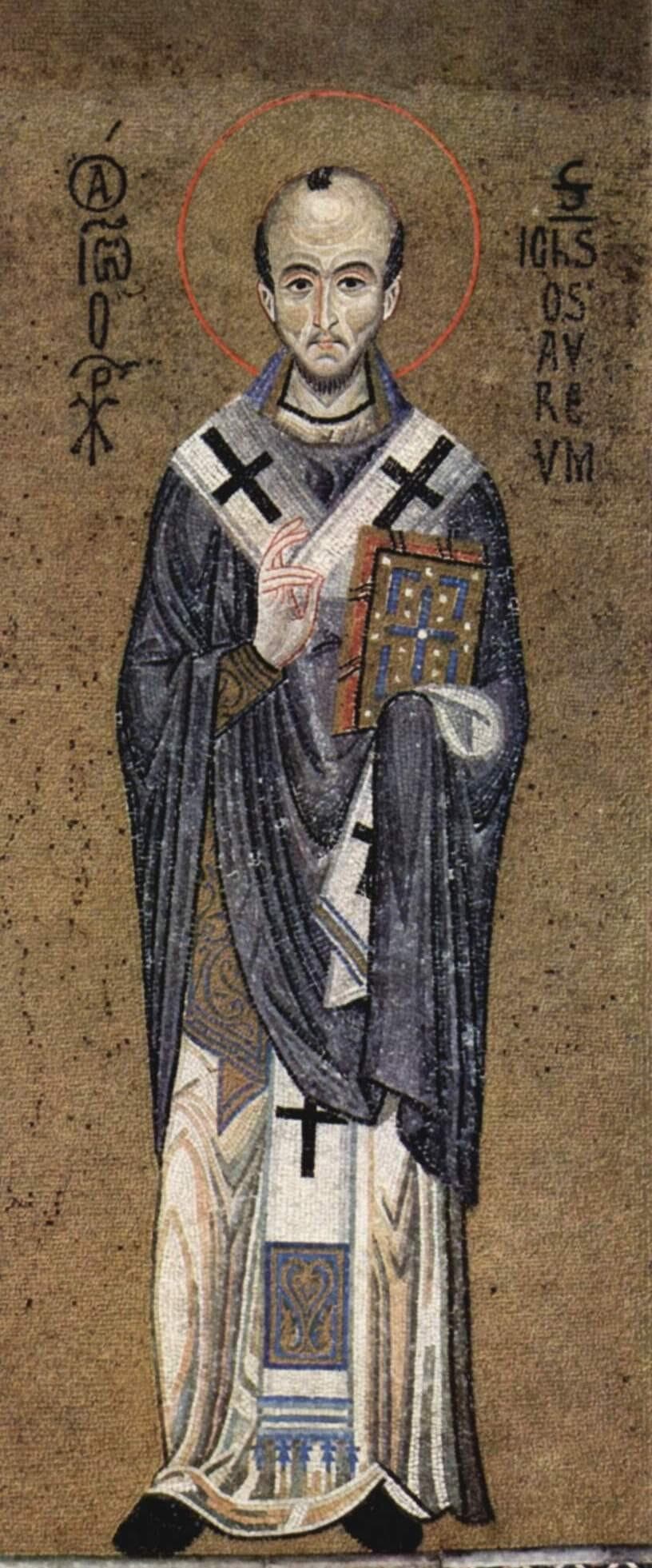
John Chrysostom
Catena Aurea · Johannesevangelium 4
So Jesus came again into Cana of Galilee, where he made the water wine. And there was a certain nobleman, whose son was sick at Capernaum. When he heard that Jesus was come out of Judæa into Galilee, he went unto him, and besought him that he would come down, and heal his son: for he was at the point of death. Then said Jesus unto him, Except ye see signs and wonders, ye will not believe. The nobleman saith unto him, Sir, come down ere my child die. Jesus saith unto him, Go thy way; thy son liveth. And the man believed the word that Jesus had spoken unto him, and he went his way. And as he was now going down, his servants met him, and told him, saying, Thy son liveth. Then enquired he of them the hour when he began to amend. And they said unto him, Yesterday at the seventh hour the fever left him. So the father knew that it was at the same hour, in the which Jesus said unto him, Thy son liveth: and himself believed, and his whole house. This is again the second miracle that Jesus did, when he was come out of Judæa into Galilee.
(Hom. xxxv. 3) They met him, to announce what had happened, and prevent Christ from coming, as He was no longer wanted. That the nobleman did not fully believe, is shewn by what follows: Then enquired he of them at what hour he began to amend. He wished to find out whether the recovery was accidental, or owing to our Lord’s word. And they said unto him, Yesterday at the seventh hour the fever left him. How obvious is the miracle? His recovery did not take place in an ordinary way, but all at once; in order that it might be seen to be Christ’s doing, and not the result of nature: So the father knew that it was at the same hour, in the which Jesus said unto him, Thy son livelh; and himself believed, and his whole house.