
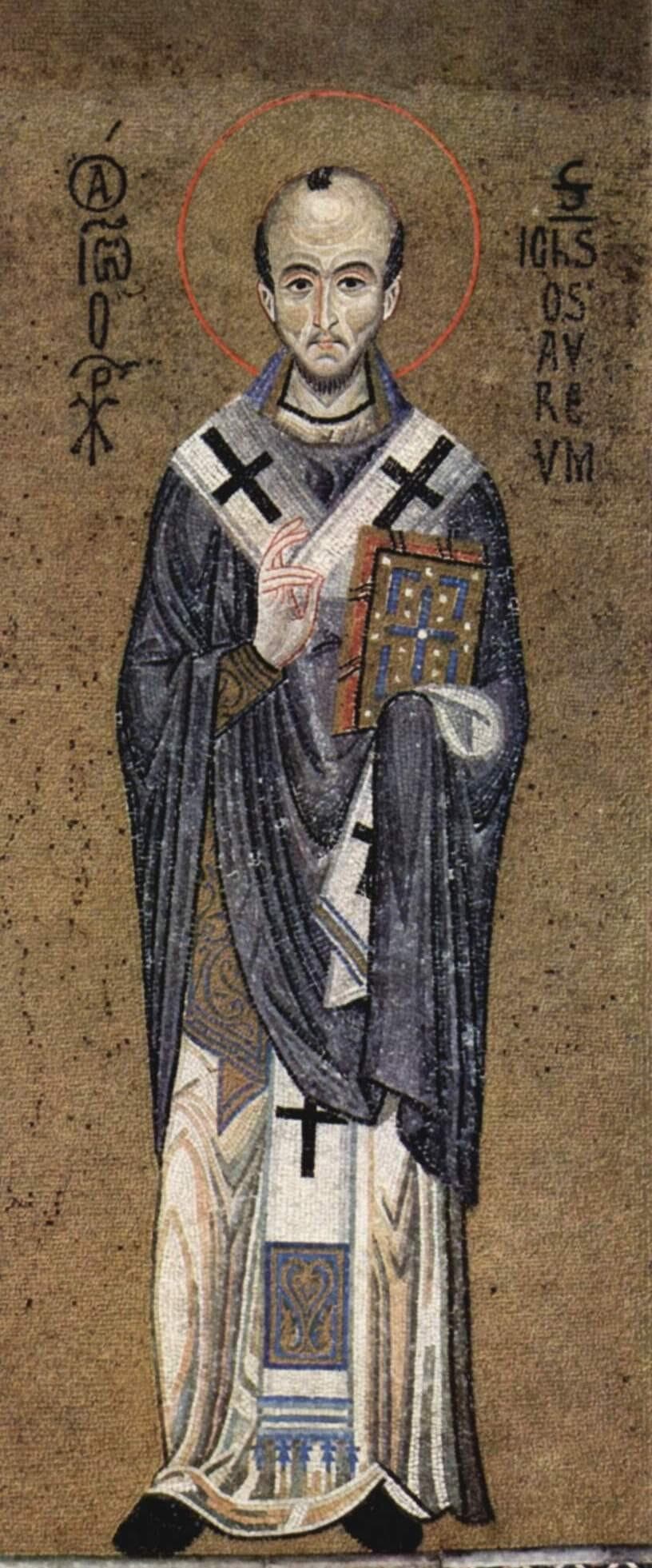
John Chrysostom
Catena Aurea · Johannesevangelium 4
The woman saith unto him, Sir, I perceive that thou art a prophet. Our fathers worshipped in this mountain; and ye say, that in Jerusalem is the place where men ought to worship. Jesus saith unto her, Woman, believe me, the hour cometh, when ye shall neither in this mountain, nor yet at Jerusalem, worship the Father. Ye worship ye know not what: we know what we worship: for salvation is of the Jews. But the hour cometh, and now is, when the true worshippers shall worship the Father in spirit and in truth: for the Father seeketh such to worship him. God is a Spirit: and they that worship him must worship him in spirit and in truth.
(Hom. xxxiii. 1) The Samaritans worshipped they knew not what, a local, a partial God, as they imagined, of whom they had the same notion that they had of their idols. And therefore they mingled the worship of God with the worship of idols. But the Jews were free from this superstition: indeed they knew God to be the God of the whole world; wherefore He says, We worship what we know. He reckons Himself among the Jews, in condescension to the woman’s idea of Him; and says as if He were a Jewish prophet, We worship, though it is certain that He is the Being who is worshipped by all. The words, For salvation is of the Jews, mean that every thing calculated to save and amend the world, the knowledge of God, the abhorrence of idols, and all other doctrines of that nature, and even the very origin of our religion, comes originally from the Jews. In salvation too He includes His own presence, which He says is of the Jews, as we are told by the Apostle, Of whom as concerning the flesh Christ came. (Rom. 9:5) See how He exalts the Old Testament, which He shews to be the root of every thing good; thus proving in every way that He Himself is not opposed to the Law.