
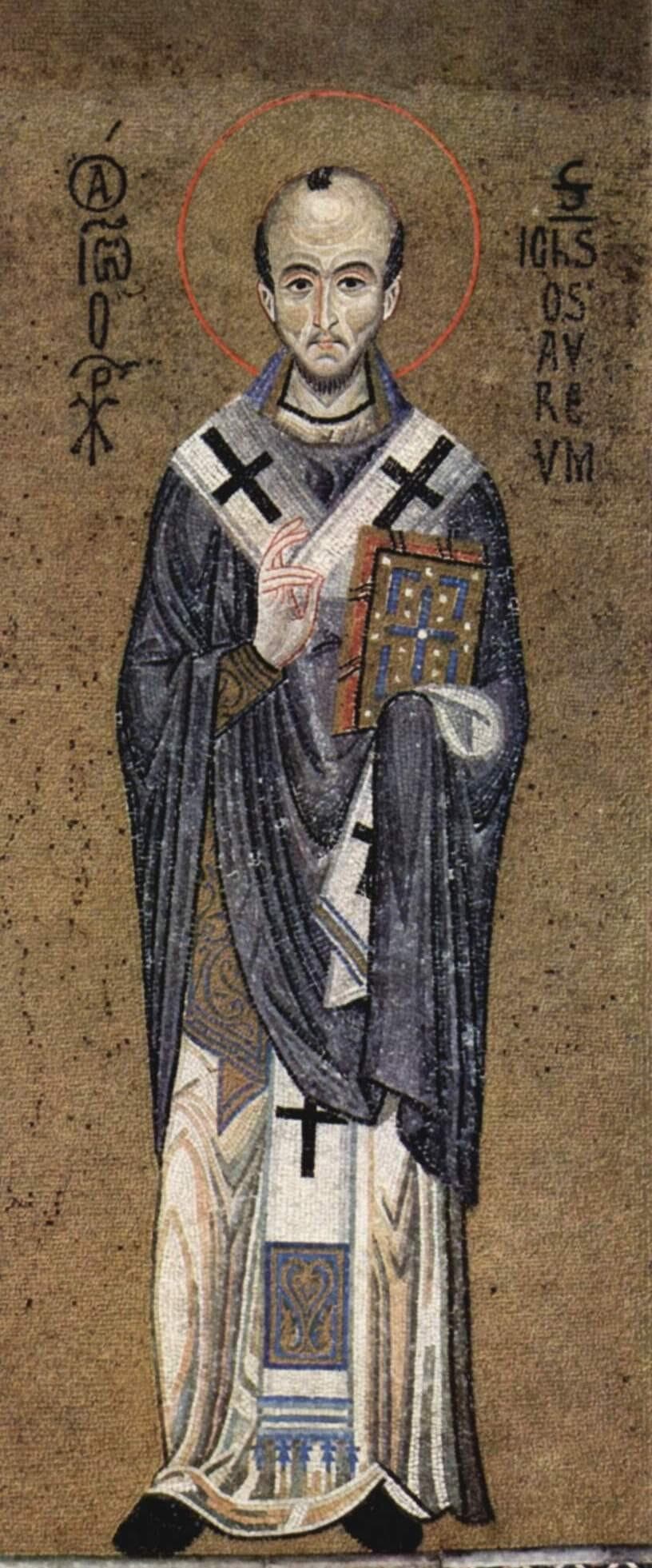
John Chrysostom
Catena Aurea · Johannesevangelium 4
There cometh a woman of Samaria to draw water: Jesus saith unto her, Give me to drink. (For his disciples were gone away unto the city to buy meat.) Then saith the woman of Samaria unto him, How is it that thou, being a Jew, askest drink of me, which am a woman of Samaria? for the Jews have no dealings with the Samaritans. Jesus answered and said unto her, If thou knewest the gift of God, and who it is that saith to thee, Give me to drink; thou wouldest have asked of him, and he would have given thee living water. The woman saith unto him, Sir, thou hast nothing to draw with, and the well is deep: from whence then hast thou that living water? Art thou greater than our father Jacob, which gave us the well, and drank thereof himself, and his children, and his cattle?
(Hom. xxxi. 3) This shews us too not only our Lord’s strength and endurance as a traveller, but also his carelessness about food; for His disciples did not carry about food with them, since it follows, His disciples were gone away into the city to buy food. Herein is shewn the humility of Christ; He is left alone. It was in His power, had He pleased, not to send away all, or, on their going away, to leave others in their place to wait on Him. But He did not choose to have it so: for in this way He accustomed His disciples to trample upon pride of every kind. However some one will say, Is humility in fishermen and tent-makersso great a matter? But these very men were all on a sudden raised to the most lofty situation upon earth, that of friends and followers of the Lord of the whole earth. And men of humble origin, when they arrive at dignity, are on this very account more liable than others to be lifted up with pride; the honour being so new to them. Our Lord therefore to keep His disciples humble, taught them in all things to subdue themselves. The woman on being told, Give Me to drink, very naturally asks, How is it that Thou, being a Jew, askest drink of me, who am a woman of Samaria? She knew Him to be a Jew from His figure and speech. Here observe her simpleness. For even had our Lord been bound to abstain from dealing with her, that was His concern, not hers; the Evangelist saying not that the Samaritans would have no dealings with the Jews, but that the Jews have no dealings with the Samaritans. The woman however, though not in fault herself, wished to correct what she thought a fault in another. The Jews after their return from the captivity entertained a jealousy of the Samaritans, whom they regarded as aliens, and enemies; and the Samaritans did not use all the Scriptures, but only the writings of Moses, and made little of the Prophets. They claimed to be of Jewish origin, but the Jews considered them Gentiles, and hated them, as they did the rest of the Gentile world.