
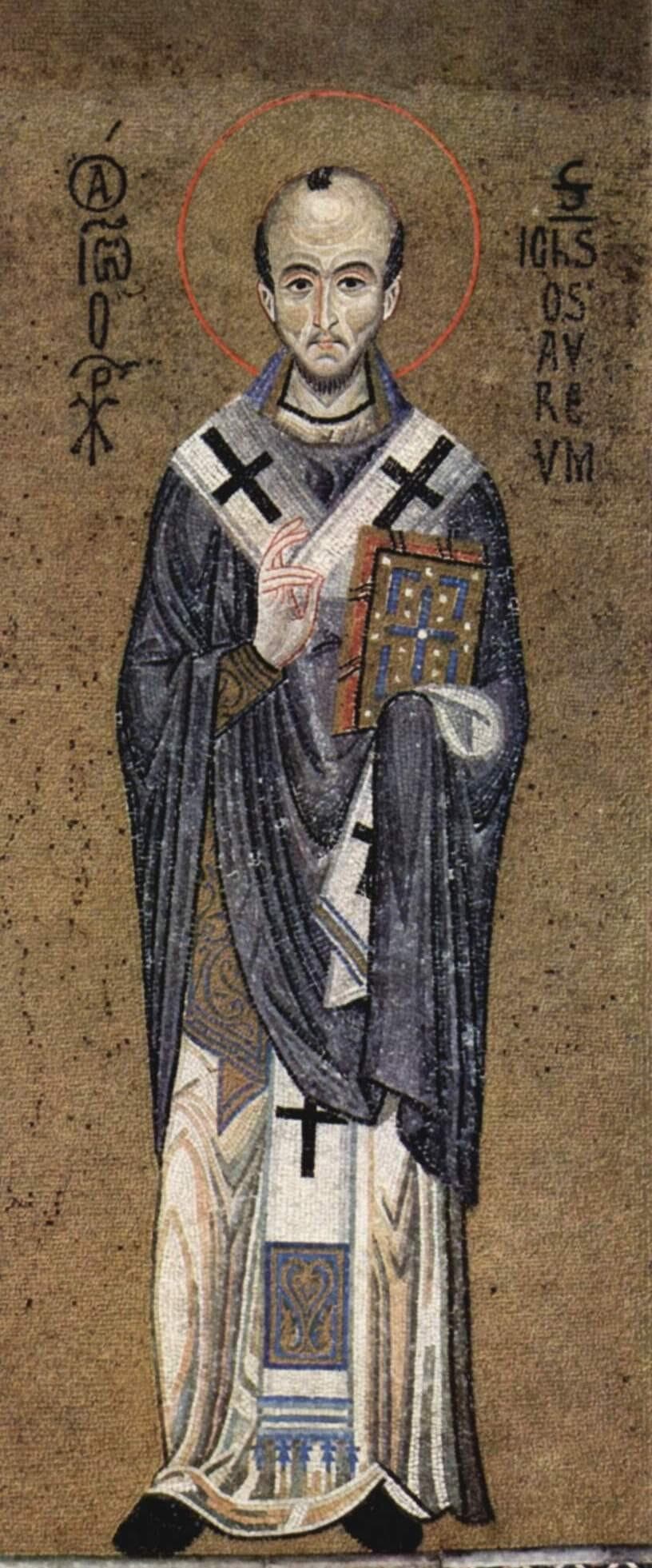
John Chrysostom
Catena Aurea · Johannesevangelium 3
For God so loved the world, that he gave his only begotten Son, that whosoever believeth in him should not perish, but have everlasting life. For God sent not his Son into the world to condemn the world; but that the world through him might be saved. He that believeth on him is not condemned: but he that believeth not is condemned already, because he hath not believed in the name of the only begotten Son of God.
(Hom. xxviii. 1) Because however He says this, slothful men in the multitude of their sins, and excess of carelessness, abuse God’s mercy, and say, There is no hell, no punishment; God remits us all our sins. But let us remember, that there are two advents of Christ; one past, the other to come. The former was, not to judge but to pardon us: the latter will be, not to pardon but to judge us. It is of the former that He says, I have not come to judge the world. Because He is merciful, instead of judgment, He grants an internal remission of all sins by baptism; and even after baptism opens to us the door of repentance, which had He not done all had been lost; for all have sinned, and come short of the glory of God. (Rom. 3:23) Afterwards, however, there follows something about the punishment of unbelievers, to warn us against flattering ourselves that we can sin with impunity. Of the unbeliever He says, ‘he is judged already.’—But first He says, He that believeth on Him is not judged. He who believeth, He says, not who enquires. But what if his life be impure? Paul very strongly declares that such are not believers: They confess, he says, that they know God, but in works deny Him. (Tit. 1:16) That is to say, Such will not be judged for their belief, but will receive a heavy punishment for their works, though unbelief will not be charged against them.