
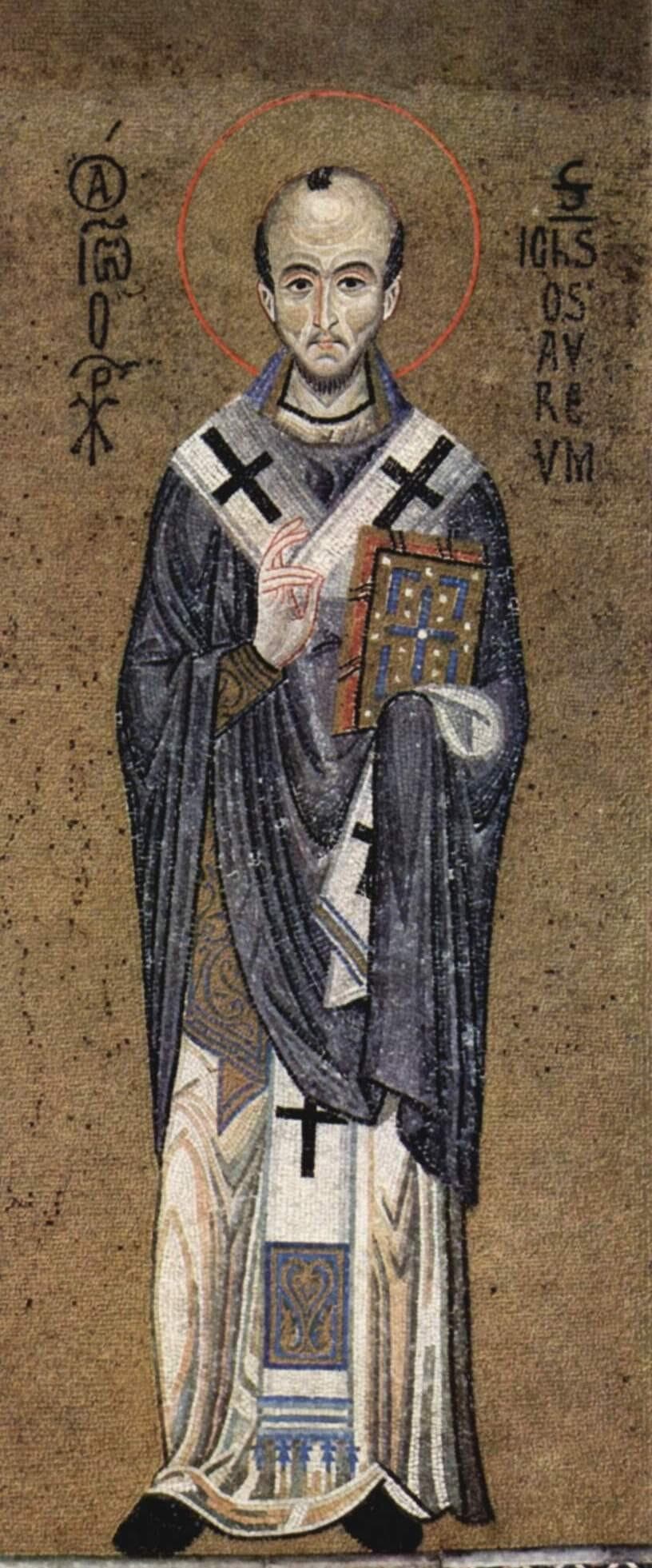
John Chrysostom
Catena Aurea · Johannesevangelium 3
For God so loved the world, that he gave his only begotten Son, that whosoever believeth in him should not perish, but have everlasting life. For God sent not his Son into the world to condemn the world; but that the world through him might be saved. He that believeth on him is not condemned: but he that believeth not is condemned already, because he hath not believed in the name of the only begotten Son of God.
Having said, Even so must the Son of man be lifted up, alluding to His death; lest His hearer should be cast down by His words, forming some human notion of Him, and thinking of His death as an evil1, He corrects this by saying, that He who was given up to death was the Son of God, and that His death would be the source of life eternal; So God loved the world, that He gave His only begotten Son, that whosoever believeth in Him should not perish, but have everlasting life; as if He said, Marvel not that I must be lifted up, that you may be saved: for so it seemeth good to the Father, who hath so loved you, that He hath given His Son to suffer for ungrateful and careless servants. The text, God so loved the world, shews intensity of love. For great indeed and infinite is the distance between the two. He who is without end, or beginning of existence, Infinite Greatness, loved those who were of earth and ashes, creatures laden with sins innumerable. And the act which springs from the love is equally indicative of its vastness. For God gave not a servant, or an Angel, or an Archangel, but His Son. Again, had He had many sons, and given one, this would have been a very great gift; but new He hath given His Only Begotten Son.