
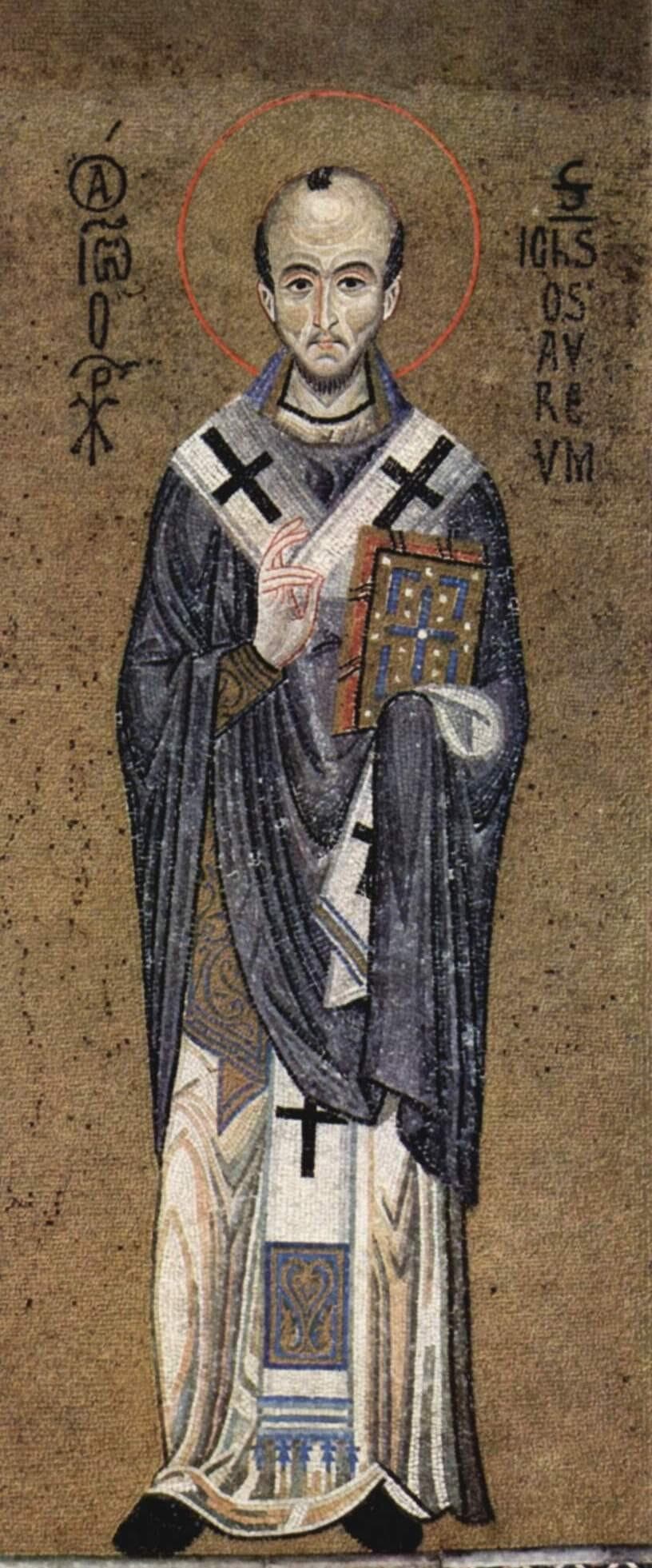
John Chrysostom
Catena Aurea · Johannesevangelium 3
Nicodemus answered and said unto him, How can these things be? Jesus answered and said unto him, Art thou a master of Israel, and knowest not these things? Verily, verily, I say unto thee, We speak that we do know, and testify that we have seen; and ye receive not our witness. If I have told you earthly things, and ye believe not, how shall ye believe, if I tell you of heavenly things.
(Hom. xxvi. 2) Nevertheless He does not charge the man with wickedness, but only with want of wisdom, and enlightenment. But some one will say, What connexion hath this birth, of which Christ speaks, with Jewish doctrines? Thus much. The first man that was made, the woman that was made out of his rib, the barren that bare, the miracles which were worked by means of water, I mean, Elijah’s bringing up the iron from the river, the passage of the Red Sea, and Naaman the Syrian’s purification in the Jordan, were all types and figures of the spiritual birth, and of the purification which was to take place thereby. Many passages in the Prophets too have a hidden reference to this birth: as that in the Psalms, Making thee young and lusty as an eagle: (Ps. 102:5) and, Blessed is he whose unrighteousness is forgiven. (Ps. 31:1) And again, Isaac was a type of this birth. Referring to these passages, our Lord says, Art thou amaster in Israel, and knowest not these things? A second time however He condescends to his infirmity, and makes use of a common argument to render what He has said credible: Verily, verily, I say unto thee, We speak that we do know, and testify that we have seen, and ye receive not our testimony. (ver. 11) Sight we consider the most certain of all the senses; so that when we say, we saw such a thing with our eyes, we seem to compel men to believe us. In like manner Christ, speaking after the manner of men, does not indeed say that he has seen actually, i. e. with the bodily eye, the mysteries He reveals; but it is clear that He means it of the most certain absolute knowledge. This then, viz. That we do know, he asserts of Himself alone.