
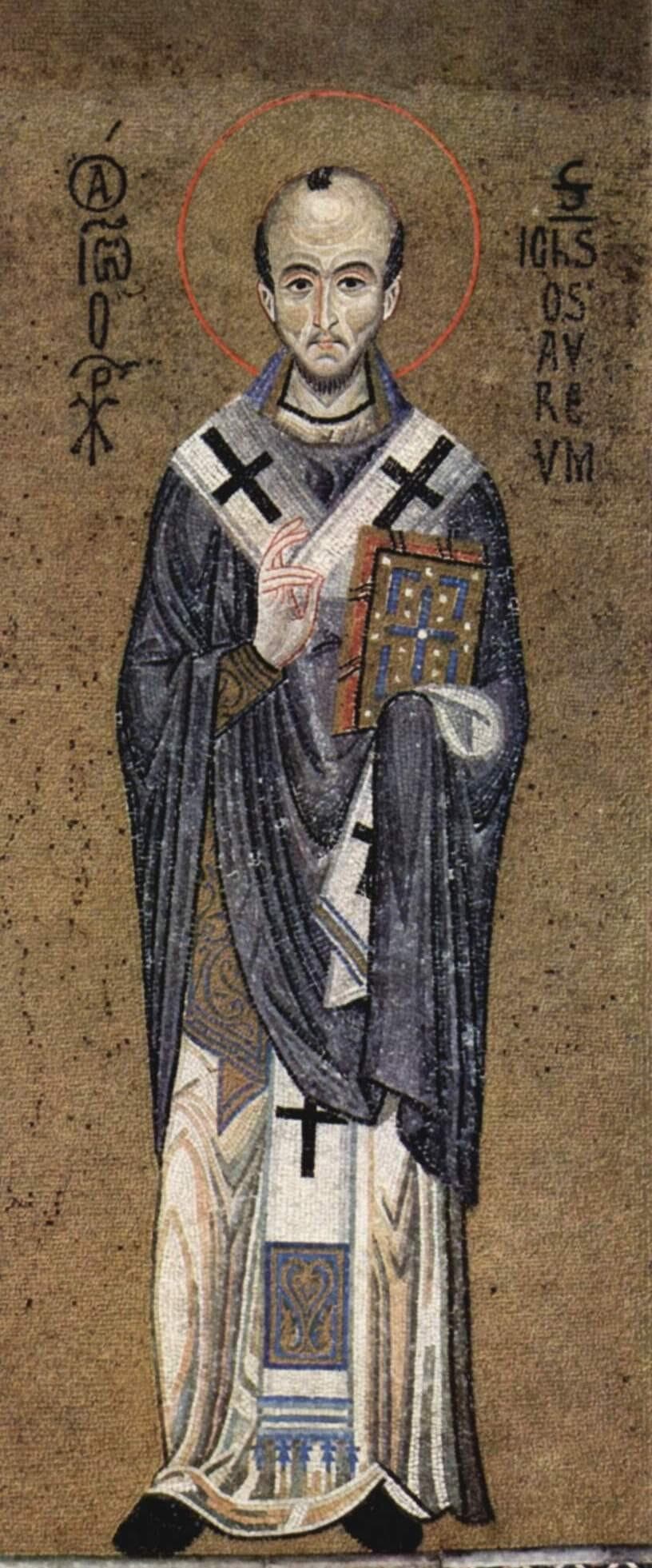
John Chrysostom
Catena Aurea · Johannesevangelium 3
There was a man of the Pharisees, named Nicodemus, a ruler of the Jews: The same came to Jesus by night, and said unto him, Rabbi, we know that thou art a teacher come from God: for no man can do these miracles that thou doest, except God be with him. Jesus answered and said unto him, Verily, verily, I say unto thee, Except a man be born again, he cannot see the kingdom of God.
(Hom. xxiv. 2. in Joan) He did not however conceive any great idea of them from His miracles; and attributed to Him as yet only a human character, speaking of Him as a Prophet, sent toexecute a commission, and standing in need of assistance to do His work; whereas the Father had begotten Him perfect, selfsufficient, and free from all defect. It being Christ’s design however for the present not so much to reveal His dignity, as to prove that He did nothing contrary to the Father; in words He is often humble, while His acts ever testify His power. And therefore to Nicodemus on this occasion He says nothing expressly to magnify Himself; but He imperceptibly corrects his low views of Him, and teaches him that He was Himself all-sufficient, and independent in His miraculous works. Hence He answers, Verily, verily, I say unto you, Except a man be born again, he cannot see the kingdom of God.