
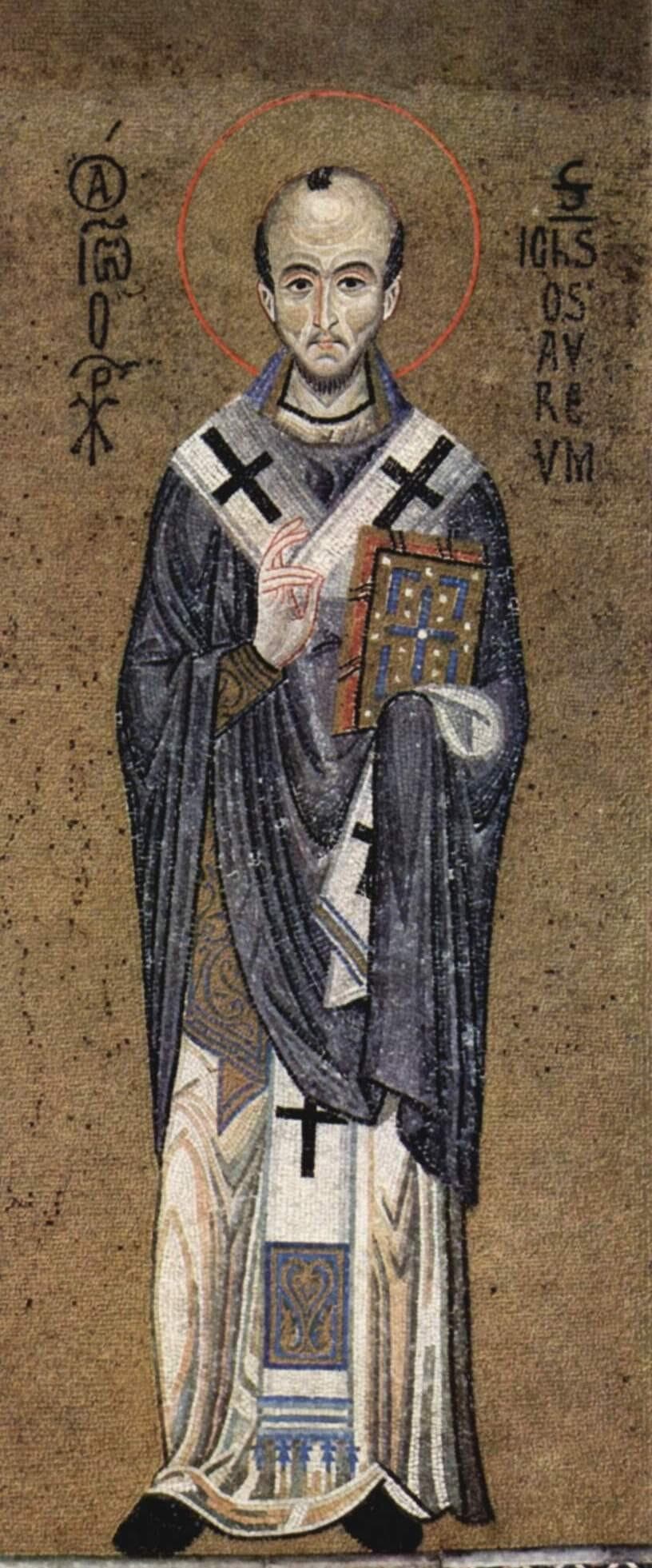
John Chrysostom
Catena Aurea · Johannesevangelium 20
Then the same day at evening, being the first day of the week, when the doors were shut where the disciples were assembled for fear of the Jews, came Jesus and stood in the midst, and saith unto them, Peace be unto you. And when he had so said, he shewed unto them his hands and his side. Then were the disciples glad, when they saw the Lord. Then said Jesus to them again, Peace be unto you: as my Father hath sent me, even so send I you. And when he had said this, he breathed on them, and saith unto them, Receive ye the Holy Ghost: Whose soever sins ye remit, they are remitted unto them; and whose soever sins ye retain, they are retained. But Thomas, one of the twelve, called Didymus, was not with them when Jesus came. The other disciples therefore said unto him, We have seen the Lord. But he said unto them, Except I shall see in his hands the print of the nails, and put my finger into the print of the nails, and thrust my hand into his side, I will not believe.
(Hom. lxxxvii. 1) As to believe directly, (ἁπλῶς) and any how, is the mark of too easy a mind, so is too much enquiring of a gross one: and this is Thomas’s fault. For when the Apostle said, We have seen the Lord, he did not believe, not because he discredited them, but from an idea of the impossibility of the thing itself: The other disciples therefore said unto him, We have seen the Lord. But he said unto them, Except I shall see in His hands the print of the nails, and put my finger into the print of the nails, and thrust my hand into His side, I will not believe. Being the grossest of all, he required the evidence of the grossest sense, viz. the touch, and would not even believe his eyes: for he does not say only, Except I shall see, but adds, and put my finger into the print of the nails, and thrust my hand into His side.