
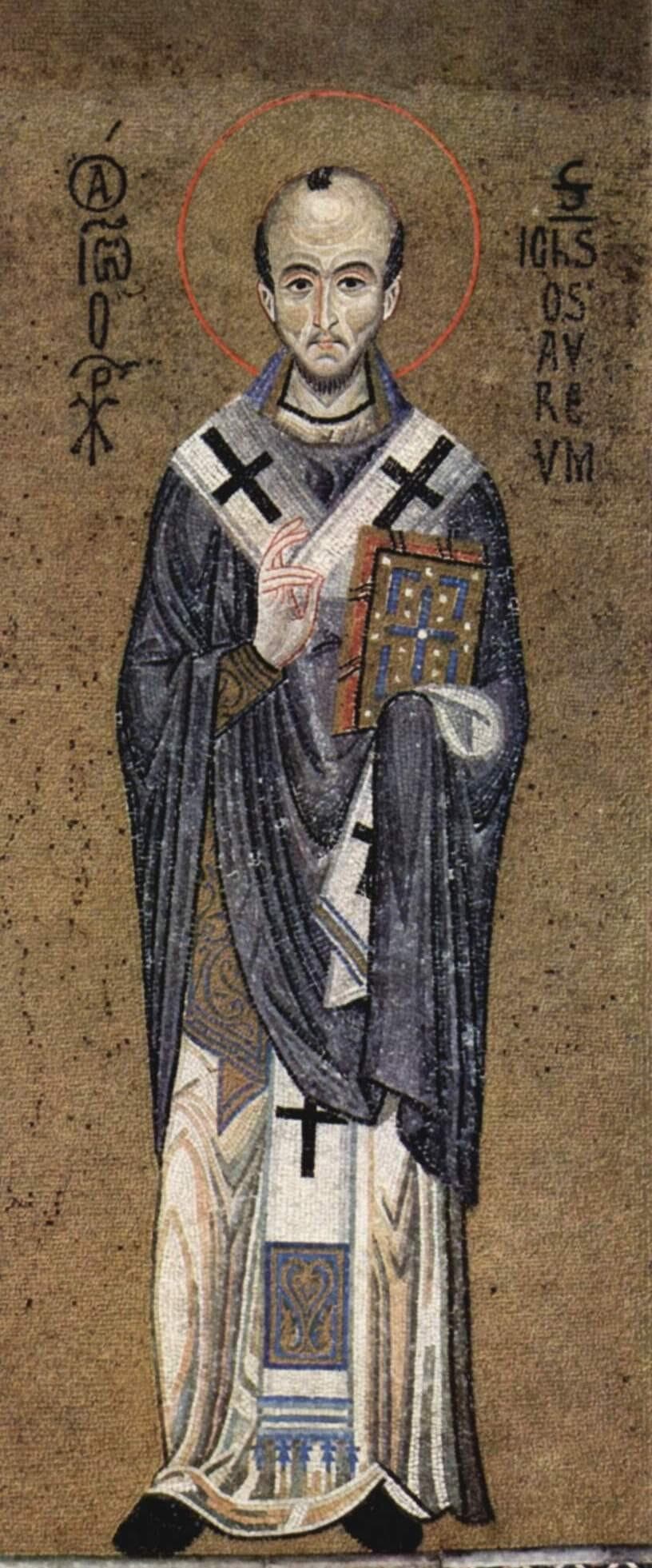
John Chrysostom
Catena Aurea · Johannesevangelium 20
Then the same day at evening, being the first day of the week, when the doors were shut where the disciples were assembled for fear of the Jews, came Jesus and stood in the midst, and saith unto them, Peace be unto you. And when he had so said, he shewed unto them his hands and his side. Then were the disciples glad, when they saw the Lord. Then said Jesus to them again, Peace be unto you: as my Father hath sent me, even so send I you. And when he had said this, he breathed on them, and saith unto them, Receive ye the Holy Ghost: Whose soever sins ye remit, they are remitted unto them; and whose soever sins ye retain, they are retained. But Thomas, one of the twelve, called Didymus, was not with them when Jesus came. The other disciples therefore said unto him, We have seen the Lord. But he said unto them, Except I shall see in his hands the print of the nails, and put my finger into the print of the nails, and thrust my hand into his side, I will not believe.
(Hom. lxxxvi. 4) A priest though he may have ordered well his own life, yet, if he have not exercised proper vigilance over others, is sent to hell with the evil doers. Wherefore, knowing the greatness of their danger, pay them all respect, even though they be not men of notable goodness. For they who are in rule, should not be judged by those who are under them. And their incorrectness of life will not at all invalidate what they do by commission from God. For not only cannot a priest, but not even angel or archangel, do any thing of themselves; the Father, Son, and Holy Ghost do all. The priest only furnishes the tongue, and the hand. For it were not just that the salvation of those who come to the Sacraments in faith, should be endangered by another’s wickedness. (Hom. lxxxvii. 1). At the assembly of the disciples all were present but Thomas, who probably had not returned from the dispersion: But Thomas, one of the twelve, called Didymus, was not with them when Jesus came.