
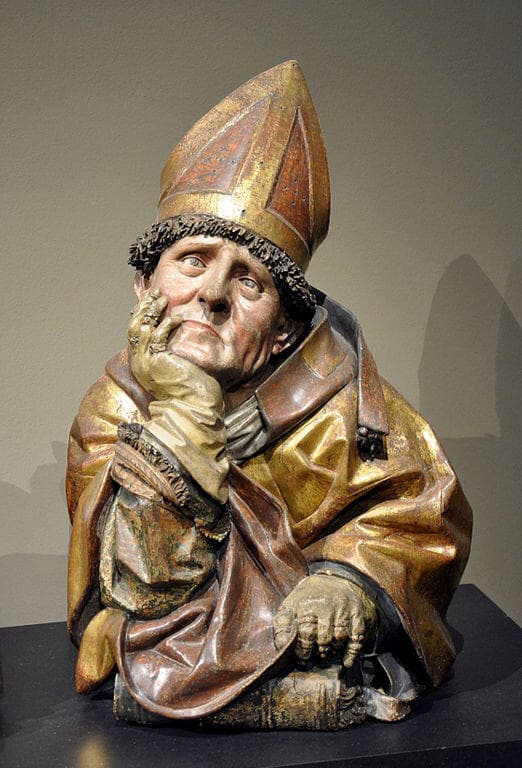
Augustine of Hippo
Catena Aurea · Johannesevangelium 19
Then the soldiers, when they had crucified Jesus, took his garments, and made four parts, to every soldier a part; and also his coat: now the coat was without seam, woven from the top throughout. They said therefore among themselves, Let us not rend it, but cast lots for it, whose it shall be: that the Scripture might be fulfilled, which saith, They parted my raiment among them, and for my vesture they did cast lots. On Pilate giving sentence, the soldiers under his command crucified Jesus: Then the soldiers, when they had crucified Jesus, took His garments. And yet if we look to their intentions, their clamours, the Jews were rather the people which crucified Him. On the parting and casting lots for His garment, John gives more circumstances than the other Evangelists, And made four parts, to every soldier a part: whence we see there were four soldiers who executed the governor’s sentence. And also His coat: took, understood. They took His coat too. The sentence is brought in so to shew that this was the only garment for which they cast lots, the others being divided. Now the coat was without seam, woven from the top throughout.
(Tract. cxviii) Why they cast lots for it, next appears: They said therefore among themselves, Let us not rend it, but cast lots for it whose it should be. It seems then that the other garments were made up of equal parts, as it was not necessary to rend them; the tunic only having to be rent in order to give each an equal share of it; to avoid which they preferred casting lots for it, and one having it all. This answered to the prophecy: That the Scripture might be fulfilled which saith, They parted My raiment among them, and for My vesture they did cast lots.