
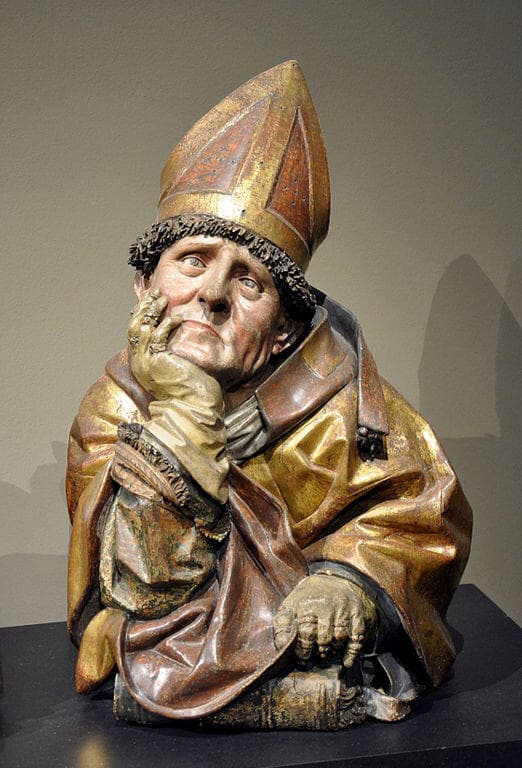
Augustine of Hippo
Catena Aurea · Johannesevangelium 18
Then Pilate entered into the judgment hall again, and called Jesus, and said unto him, Art thou the King of the Jews? Jesus answered him, Sayest thou this thing of thyself, or did others tell it thee of me? Pilate answered, Am I a Jew? Thine own nation and the chief priests have delivered thee unto me: what hast thou done? Jesus answered, My kingdom is not of this world: if my kingdom were of this world, then would my servants fight, that I should not be delivered to the Jews: but now is my kingdom not from hence. Pilate therefore said unto him, Art thou a king then? Jesus answered, Thou sayest that I am a king. To this end was I born, and for this cause came I into the world, that I should bear witness unto the truth. Every one that is of the truth heareth my voice. Pilate saith unto him, What is truth? Jesus answered him, Sayest thou this thing of thyself, or did others tell it thee of Me?
(Tr. cxv) He did not fear to confess Himself a King, but so replied as neither to deny that He was, nor yet to confess Himself a King in such sense as that His kingdom should be supposed to be of this world. He says, Thou sayest, meaning, Thou being carnal sayest it carnally. He continues, To this end was I born, and for this cause came I into the world, that I should bear witness to the truth. The pronoun here, in hoc, must not be dwelt long on, as if it meant, in hâc re, but shortened, as if it stood, ad hoc natus sum, as the next words are, ad hoc veni in mundum. Wherein it is evident He alludes to His birth in the flesh, not to that divine birth which never had beginning.