
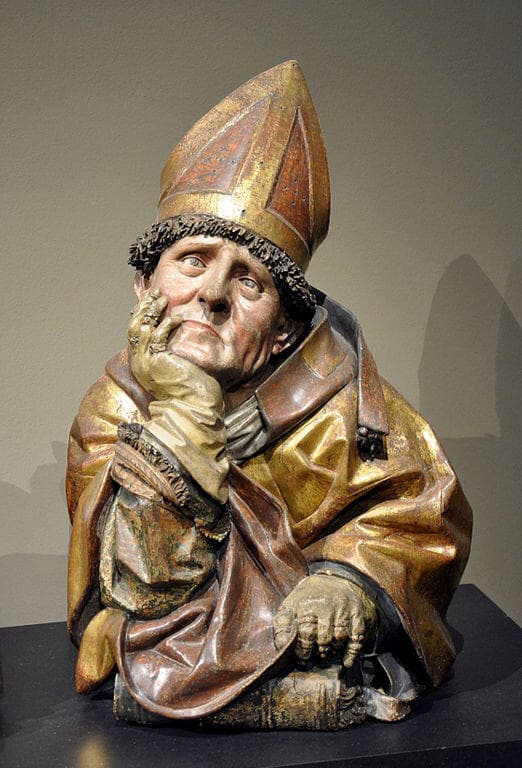
Augustine of Hippo
Catena Aurea · Johannesevangelium 17
Father, I will that they also, whom thou hast given me, be with me where I am; that they may behold my glory, which thou hast given me: for thou lovedst me before the foundation of the world. O righteous Father, the world hath not known thee: but I have known thee, and these have known that thou hast sent me. And I have declared unto them thy name, and will declare it: that the love wherewith thou hast loved me may be in them, and I in them.
(Tr. cxi) But as respects the form of God, wherein He is equal to the Father, if we understand these words, that they may be with Me where I am, with reference to that, then away with all bodily ideas, and enquire not where the Son, Who is equal to the Father, is: for no one hath discovered where He is not. Wherefore it was not enough for Him to say, I will that they may be where I am, but He adds, with Me. For to be with Him is the great good: even the miserable can be where He is, but only the happy can be with Him. And as in the ease of the visible, though very different be whatever example we take, a blind man will serve for one, as a blind man though He is where the light is, yet is not himself with the light, but is absent from it in its presence, so not only the unbelieving, but the believing, though they cannot be where Christ is not, yet are not themselves with Christ by sight: by faith we cannot doubt but that a believer is with Christ. But here He is speaking of that sight wherein we shall see Him as He is; as He adds, That they may behold My glory, which Thou hast given Me. That they may behold, He says, not, that they may believe. It is the reward of faith which He speaks of, not faith itself.