
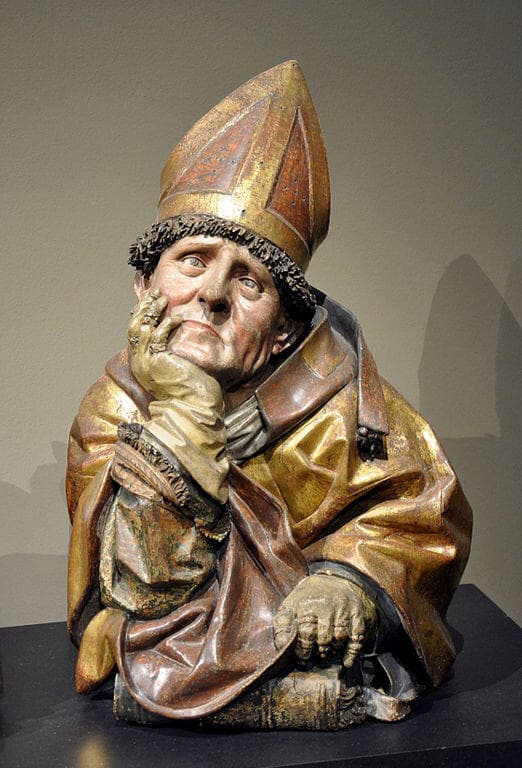
Augustine of Hippo
Catena Aurea · Johannesevangelium 17
Neither pray I for these alone, but for them also which shall believe on me through their word; That they all may be one; as thou, Father, art in me, and I in thee, that they also may be one in us: that the world may believe that thou hast sent me. And the glory which thou gavest me I have given them; that they may be one, even as we are one: I in them, and thou in me, that they may be made perfect in one: and that the world may know that thou hast sent me, and hast loved them, as thou hast loved me.
(Tr. cx) Then our Saviour, Who, by praying to the Father, shewed Himself to be man, now shews that, being God with the Father, He doth what He prays for: And the glory which Thou gavest Me, I have given them. What glory, but immortality, which human nature was about to receive in Him? For that which was to be by unchangeable predestination, though future, He expresses by the past tense. That glory of immortality, which He says was given Him by the Father, we must understand He gave Himself also. For when the Son is silent of His own cooperation in the Father’s work, He shews His humility: when He is silent of the Father’s cooperation in His work, He shews His equality. In this way here He neither disconnects Himself with the Father’s work, when He says, The glory which Thou gavest Me, nor the Father with His work, when He says, I have given them. But as He was pleased by prayer to the Father to obtainthat all might be one, so now He is pleased to effect the same by His own gift; for He continues, That all may be one, even as We are one.