
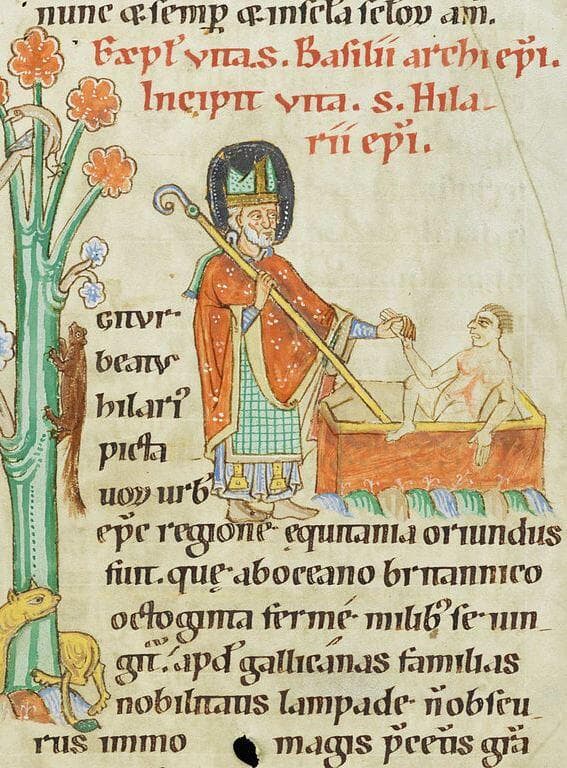
Hilary of Poitiers
Catena Aurea · Johannesevangelium 17
Neither pray I for these alone, but for them also which shall believe on me through their word; That they all may be one; as thou, Father, art in me, and I in thee, that they also may be one in us: that the world may believe that thou hast sent me. And the glory which thou gavest me I have given them; that they may be one, even as we are one: I in them, and thou in me, that they may be made perfect in one: and that the world may know that thou hast sent me, and hast loved them, as thou hast loved me.
(viii. de Trin) Heretics endeavouring to get over the words, I and My Father are one, as a proving unity of nature, and to reduce them to mean a unity simply of natural love, and agreement of will, bring forwards these words of our Lord’s as an example of this kind of unity: That they may be all one, as Thou, Father, art in Me, and I in Thee. But though impiety can cheat its own understanding, it cannot alter the meaning1 of the words themselves. For they who are born again of a nature that gives unity in life eternal, they cease to be one in will merely, acquiring the same nature by their regeneration: but the Father and Son alone are properly one, because God, only-begotten of God, can only exist in that nature from which He is derived.