
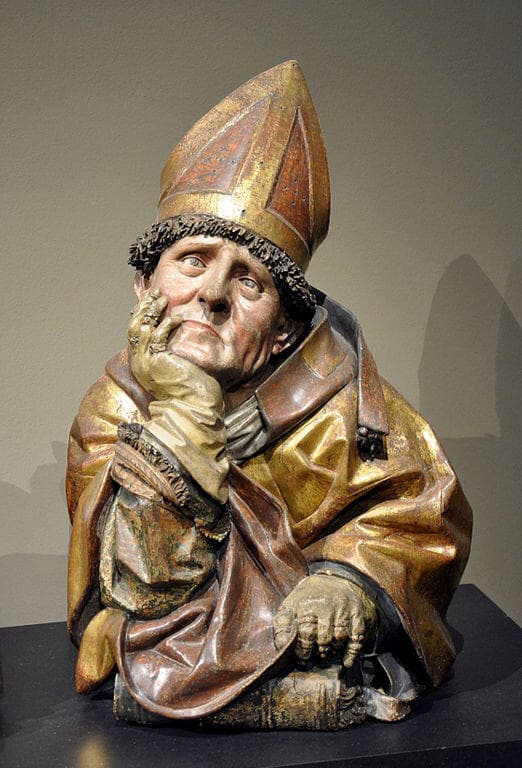
Augustine of Hippo
Catena Aurea · Johannesevangelium 17
Neither pray I for these alone, but for them also which shall believe on me through their word; That they all may be one; as thou, Father, art in me, and I in thee, that they also may be one in us: that the world may believe that thou hast sent me. And the glory which thou gavest me I have given them; that they may be one, even as we are one: I in them, and thou in me, that they may be made perfect in one: and that the world may know that thou hast sent me, and hast loved them, as thou hast loved me.
(Tr. cix) All, i. e. not only those who were then alive, but those who were to be born; not those only who heard the Apostles themselves, but us who were born long after their death. We have all believed in Christ through their word: for they first heard that word from Christ, and then preached it to others, and so it has come down, and will go down to all posterity. We may see that in this prayer there are some disciples whom He does not pray for; for those, i. e. who were neither with Him at the time, nor were about to believe on Him afterwards through the Apostles’ word, but believed already. Was Nathanael with Him then, or Joseph of Arimathea, and many others, who, John says, believed on Him? I do not mention old Simeon, or Anna the prophetess, Zacharias, Elisabeth, or John the Baptist; for it might be answered that it was not necessary to pray for dead persons, such as these who departed with such rich merits. With respect to the former then we must understand that they did not yet believe in Him, as He wished, but that after His resurrection, when the Apostles were taught and strengthened by the Holy Spirit, they attained to a right faith. The case of Paul however still remains, An Apostle not of men, or by men; (Gal. 1:1) and that of the robber, who believed when even the teachers themselves of the faith fell away. We must understand then, their word, to mean the word of faith itself which they preached to the world; it being called their word, because it was preached in the first instance and principally by them; for it was being preached by them, when Paul received it by revelation from Jesus Christ Himself. And in this sense the robber too believed their word. Wherefore in this prayer the Redeemer prays for all whom He redeemed, both present and to come. And then follows the thing itself which He prays for, That they all may be one. He asks that for all, which he asked above for the disciples; that all both we and they may be one.