
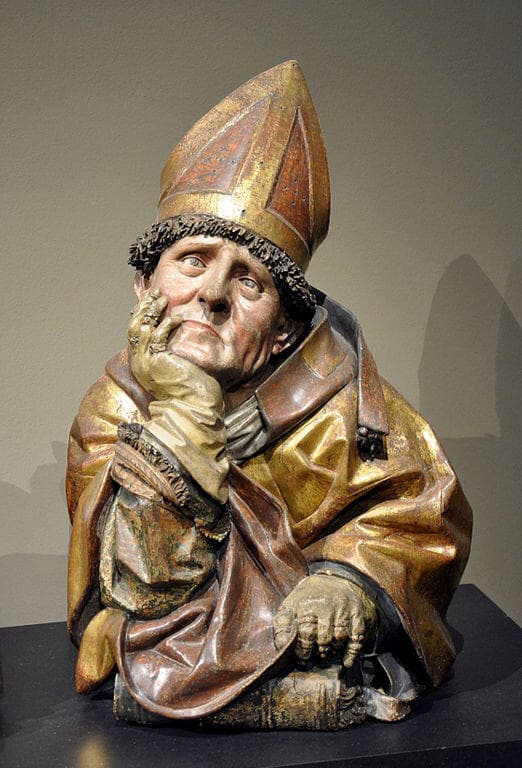
Augustine of Hippo
Catena Aurea · Johannesevangelium 15
If I had not come and spoken unto them, they had not had sin: but now they have no cloke for their sin. He that hateth me hateth my Father also. If I had not done among them the works which none other man did, they had not had sin: but now have they both seen and hated both me and my Father. But this cometh to pass, that the word might be fulfilled that is written in their law, They hated me without a cause.
(Tract. lxxxix. 1) Christ spoke to the Jews only, not to any other nation. In them then was that world which hated Christ and His disciples; and not only in them, but in us also. Were the Jews then without sin before Christ came in the flesh, because Christ had not spoken to them? By sin here He means not every sin, but a certain great sin, which includes all, and which alone hinders the remission of other sins, viz. unbelief. They did not believe in Christ, who came that they might believe on Him. This sin then they would not have had, had not Christ come; for Christ’s advent, as it was the salvation of the believing, so was the perdition of the unbelieving. But now they have no cloke for their sin. If those to whom Christ had not come or spoken, had not an excuse (πρόφασιν, excusationem Vulg. cloke E. T.) for their sin, why is it said here that these had no excuse, because Christ had come and spoken to them? If the first had excuse, did it do away with their punishment altogether, or only mitigate it? I answer, that this excuse covered, not all their sin, but only this one, viz. that they did not believe in Christ. But they are not of this number to whom Christ came by His disciples: they are not to be let off with a lighter punishment, who altogether refused to receive Christ’s love, and, as far as concerned them, wished its destruction. This excuse they may have who died before they heard of Christ’s Gospel; but this will not shield them from damnation. For whoever are not saved in the Saviour, who came to seek what was lost, shall without doubt go to perdition: though some will have lighter, others severer punishments. He perishes to God, who is punished with an exclusion from that happiness which is given to the saints. But there is as great a diversity of punishments, as there is of sins: though how this is settled is a matter known to the Divine Wisdom indeed, but too deep for human conjecture to examine or pronounce upon.