
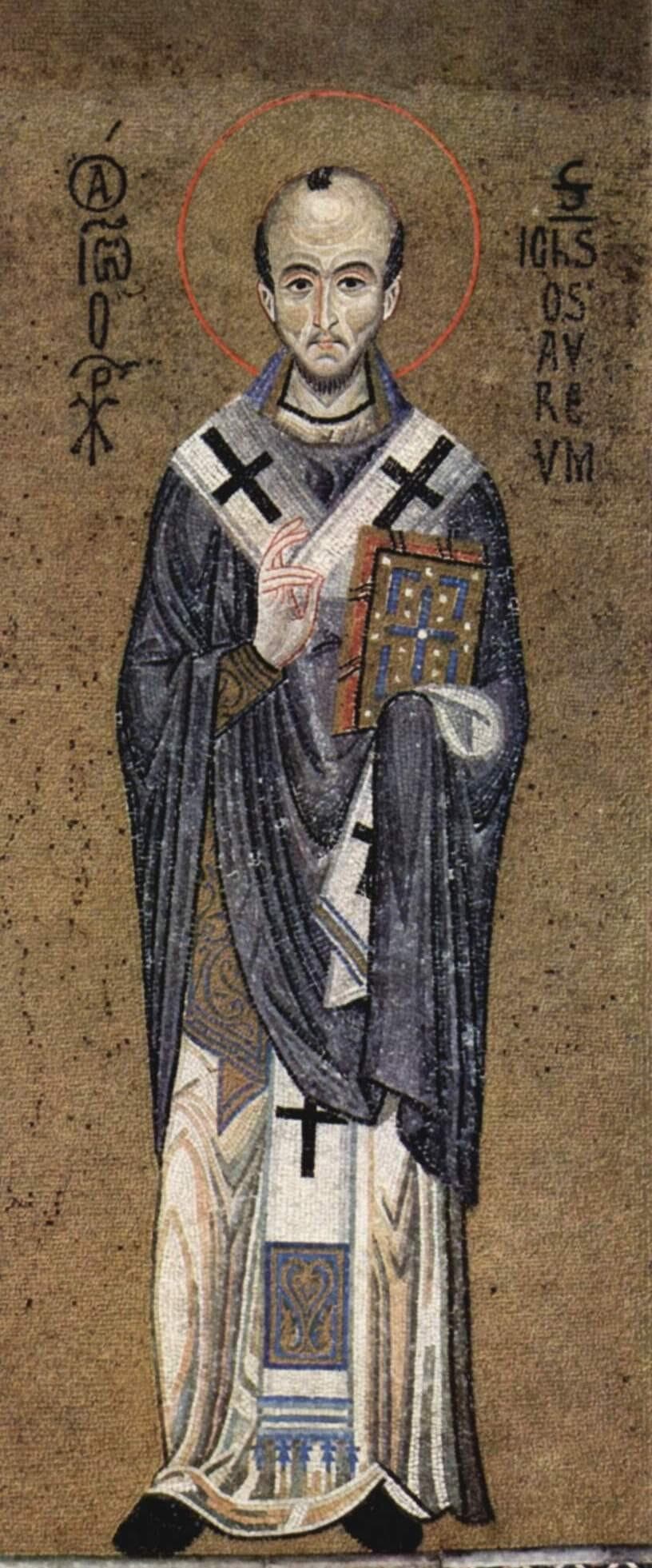
John Chrysostom
Catena Aurea · Johannesevangelium 14
Philip saith unto him, Lord, shew us the Father, and it sufficeth us. Jesus saith unto him, Have I been so long time with you, and yet hast thou not known me, Philip? he that hath seen me hath seen the Father; and how sayest thou then, Shew us the Father? Believest thou not that I am in the Father, and the Father in me? the words that I speak unto you I speak not of myself: but the Father that dwelleth in me, he doeth the works. Believe me that I am in the Father, and the Father in me: or else believe me for the very works’ sake.
(Hom. lxxiv. 1) Or thus: Philip, because [he thought] he had seen the Son with his bodily eye, wished to see the Father in the same way; perhaps too remembering what the Prophet said, I saw the Lord, and therefore he says, Shew us the Father. (Isa. 6:1) The Jews had asked, who was His Father; and Peter and Thomas, whither He went; and neither were told plainly. Philip therefore, that he might not seem burdensome, after saying, Shew us the Father, adds, And it sufficeth us: i. e. we seek for no more. Our Lord in reply does not say, that he asked an impossible thing, but that he had not seen the Son to begin with, for that if he had seen Him, he would have seen the Father: Have I been so long time with you, and yet hast thou not known Me? He does not say, not seen Me, but, not known Me; not known that the Son, being what the Father is, does in Himself fitly shew the Father. Then dividing the Persons, He says, He that hath seen Me hath seen the Father; that none might maintain that He was both the Father and the Son. The words shew too that even the Son was not seen in a bodily sense. So if any one takes seeing here, for knowing, I will not contradict him, but will take the sentence as if it was, He that hath known Me, hath known the Father. He shews here His consubstantiality with the Father: He that hath seen My substance, hath seen the Father. Whence it is evident He is not a creature: for all know and see the creature, but not all God; Philip, for instance, who wished to see the substance of the Father. If Christ then had been of another substance from the Father, He would never have said, He that hath seen Me, hath seen the Father. A man cannot see the substance of gold in silver: one nature cannot be made apparent by another.