
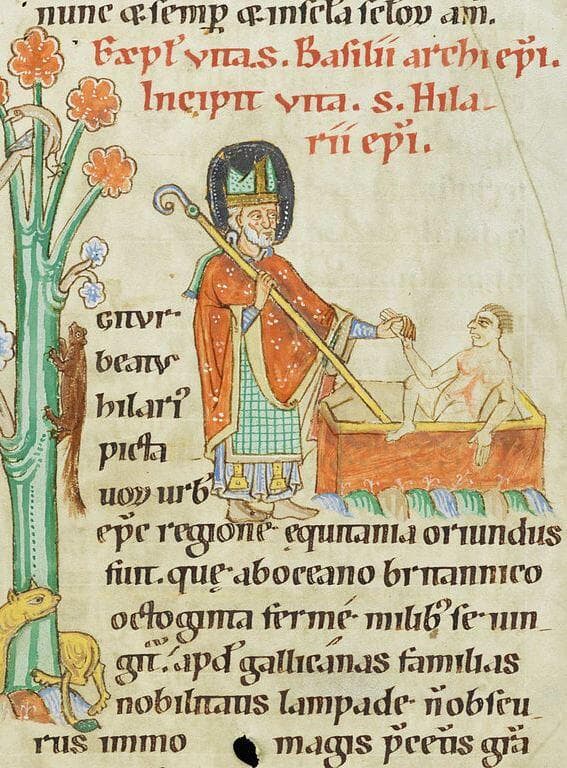
Hilary of Poitiers
Catena Aurea · Johannesevangelium 14
Philip saith unto him, Lord, shew us the Father, and it sufficeth us. Jesus saith unto him, Have I been so long time with you, and yet hast thou not known me, Philip? he that hath seen me hath seen the Father; and how sayest thou then, Shew us the Father? Believest thou not that I am in the Father, and the Father in me? the words that I speak unto you I speak not of myself: but the Father that dwelleth in me, he doeth the works. Believe me that I am in the Father, and the Father in me: or else believe me for the very works’ sake.
(vii. de Trin) A declaration so new startled Philip. Our Lord is seen to be man. He confesses Himself to be the Son of God, declares that, if He were known, the Father would be known, that, if He is seen, the Father is seen. The familiarity of the Apostle therefore breaks forth into questioning our Lord, Philip saithunto Him, Lord, shew us the Father, and it sufficeth us.He did not deny He could be seen (non visum negavit), but wished to be shewn him; nor did he wish to see with his bodily eyes, but that He whom he had seen might be made manifest to his understanding. He had seen the Son in the form of man, but how through that form He saw the Father, he did not know. This he wants to be shewn him, shewn to his understanding, not set before his eyes; and then he will be satisfied: And it sufficeth us.