
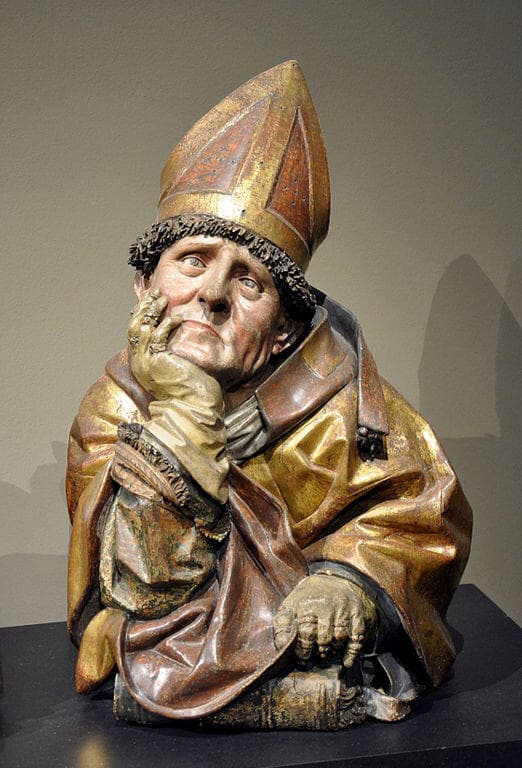
Augustine of Hippo
Catena Aurea · Johannesevangelium 13
So after he had washed their feet, and had taken his garments, and was set down again, he said unto them, Know ye what I have done to you? Ye call me Master and Lord: and ye say well; for so I am. If I then, your Lord and Master, have washed your feet; ye also ought to wash one another’s feet. For I have given you an example, that ye should do as I have done to you. Verily, verily, I say unto you, The servant is not greater than his lord: neither he that is sent greater than he that sent him. If ye know these things, happy are ye if ye do them. I speak not of you all: I know whom I have chosen: but that the Scripture may be fulfilled, He that eateth bread with me hath lifted up his heel against me. Now I tell you before it come, that, when it is come to pass, ye may believe that I am he. Verily, verily, I say unto you, He that receiveth whomsoever I send receiveth me; and he that receiveth me receiveth him that sent me.
(Tr. lviii. 3) It is enjoined in the Proverbs, Let another man praise thee, and not thine own mouth. (Prov. 27:2.) For it is dangerous for one to praise himself, who has to beware of pride. But He who is above all things, howsoever He praise Himself, extolleth not Himself too highly. Nor can God be called arrogant: for that we should know Him is no gain to Him, but to us. Nor can any one know Him, unless He who knows, shews Himself. So that if to avoid arrogance He did not praise Himself, He would be denying us wisdom. But why should the Truth fear arrogance? To His calling Himself Master, no one could object, even were He man only, since professors in different arts call themselves so without presumption. But what free man can bear the title of lord in a man? Yet when God speaks, height cannot exalt itself, truth cannot lie; it is for us to submit to that height, to obey that truth. Wherefore ye say well in that ye call Me Master and Lord, for so I am; but if I were not what ye say, ye would say ill.