
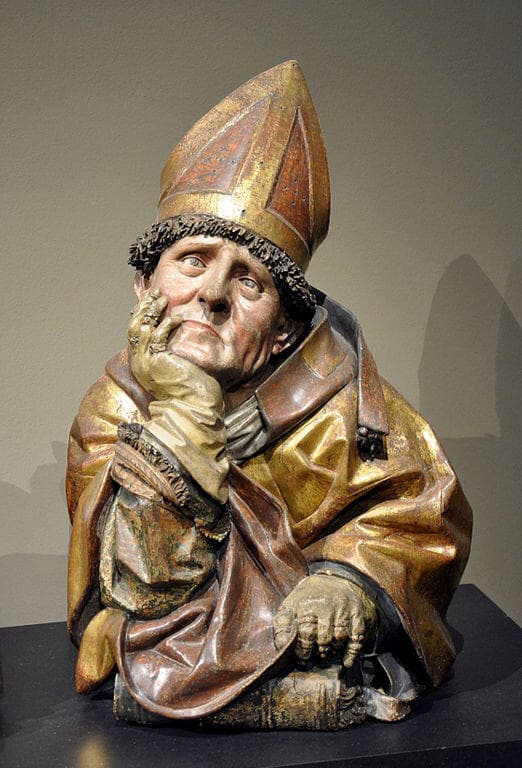
Augustine of Hippo
Catena Aurea · Johannesevangelium 11
And Jesus lifted up his eyes, and said, Father, I thank thee that thou hast heard me. And I knew that thou hearest me always: but because of the people which stand by I said it, that they may believe that thou hast sent me. And when he thus had spoken, he cried with a loud voice, Lazarus, come forth. And he that was dead came forth, bound hand and foot with graveclothes: and his face was bound about with a napkin. Jesus saith unto them, Loose him, and let him go. Then many of the Jews which came to Mary, and had seen the things which Jesus did, believed on him. But some of them went their ways to the Pharisees, and told them what things Jesus had done.
(lib. lxxxiii. Quæst. q. 65) That Lazarus came forth from the grave, signifies the soul’s deliverance from carnal sins. That he came bound up in grave clothes means, that even we who are delivered from carnal things, and serve with the mind the law of God, yet cannot, so long as we are in the body, be free from the besetments of the flesh. That his face was bound about with a napkin means, that we do not attain to full knowledge in this life. And when our Lord says, Loose him, and let him go, we learn that in another world all veils will be removed, and that we shall see face to face.