
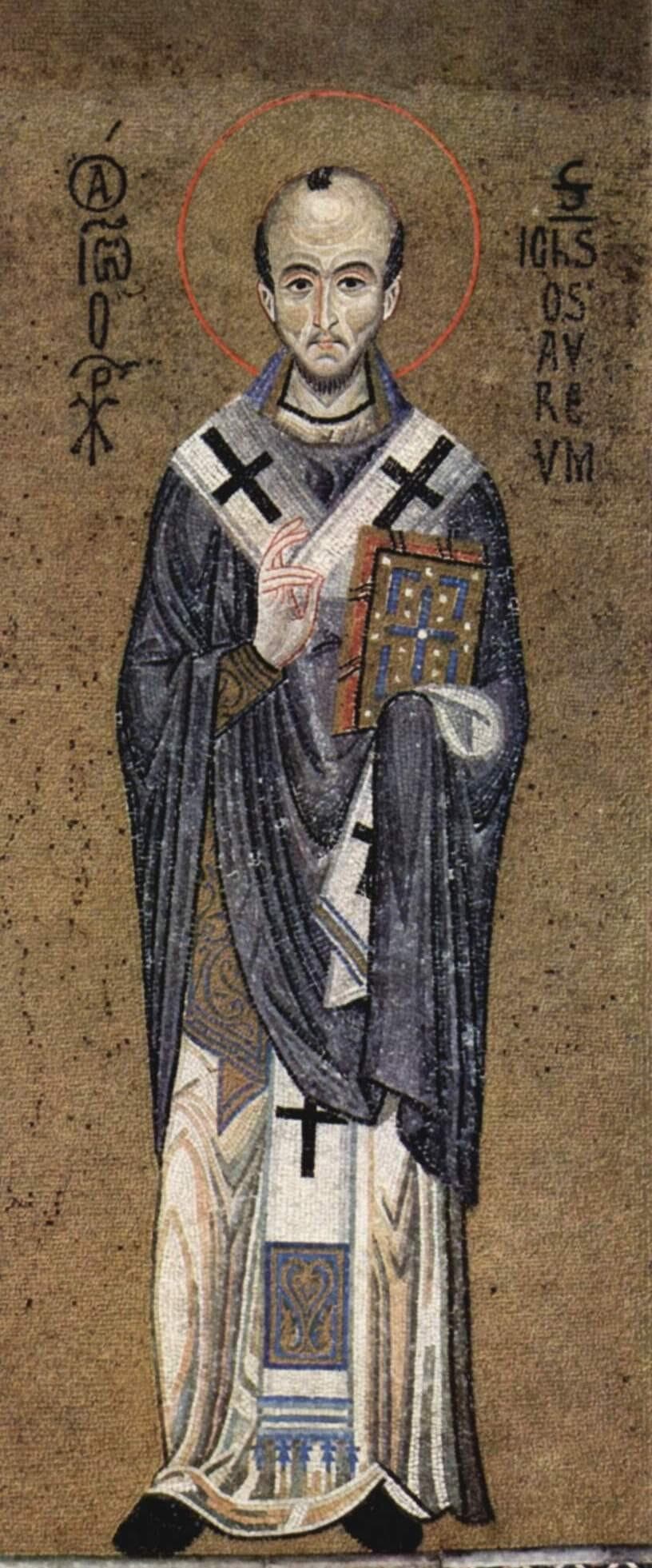
John Chrysostom
Catena Aurea · Johannesevangelium 11
And Jesus lifted up his eyes, and said, Father, I thank thee that thou hast heard me. And I knew that thou hearest me always: but because of the people which stand by I said it, that they may believe that thou hast sent me. And when he thus had spoken, he cried with a loud voice, Lazarus, come forth. And he that was dead came forth, bound hand and foot with graveclothes: and his face was bound about with a napkin. Jesus saith unto them, Loose him, and let him go. Then many of the Jews which came to Mary, and had seen the things which Jesus did, believed on him. But some of them went their ways to the Pharisees, and told them what things Jesus had done.
(Hom. lxiv. 2) i. e. There is no difference of will between Me and Thee. Thou hast heard Me, does not shew any lack of power in Him, or that He is inferior to the Father. It is a phrase that is used between friends and equals. That the prayer is not really necessary for Him, appears from the words that follow, And I knew that Thou heardest Me always: as if He said, I need not prayer to persuade Thee; for Ours is one will. He hides His meaning on account of the weak faith of His hearers. For God regards not so much His own dignity, as our salvation; and therefore seldom speaks loftily of Himself, and, even when He does, speaks in an obscure way; whereas humble expressions abound in His discourses.