
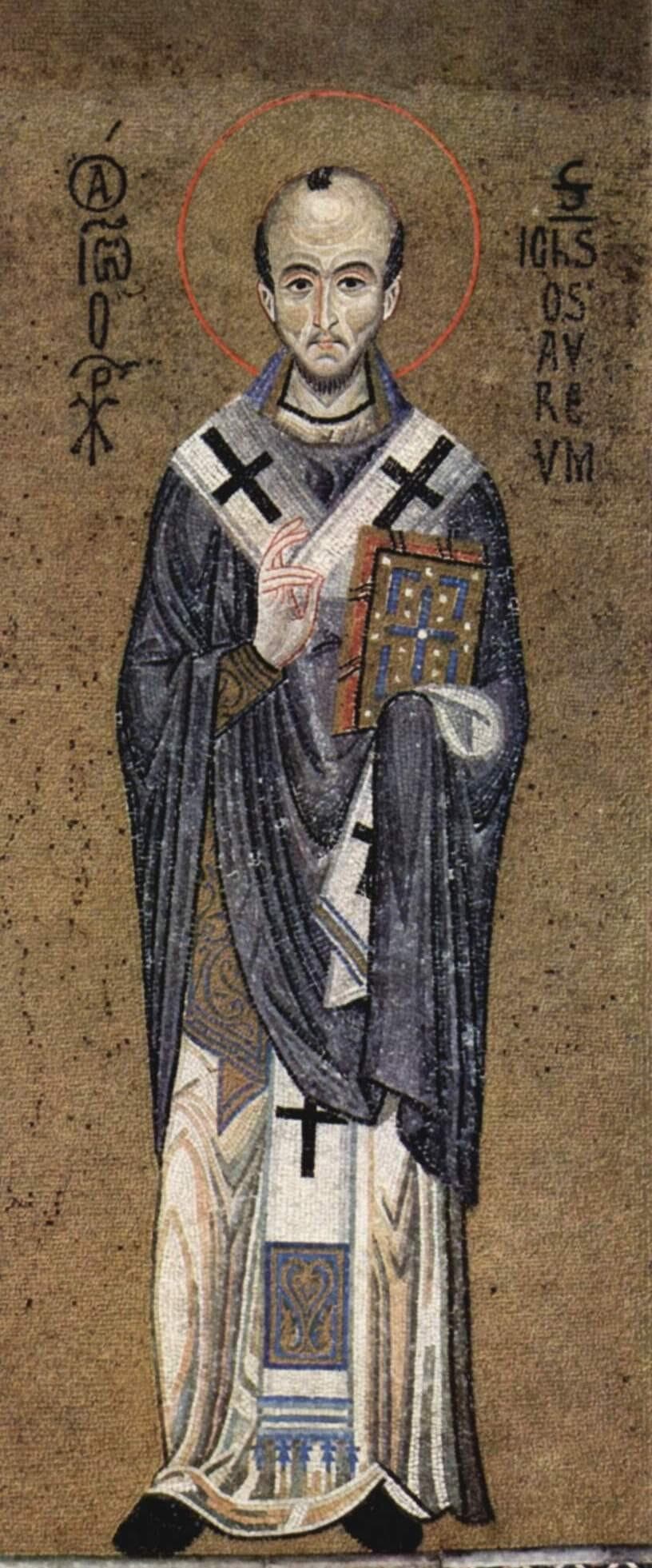
John Chrysostom
Catena Aurea · Johannesevangelium 11
When Jesus therefore saw her weeping, and the Jews also weeping which came with her, he groaned in the spirit, and was troubled, And said, Where have ye laid him? They said unto him, Lord, come and see. Jesus wept. Then said the Jews, Behold how he loved him! And some of them said, Could not this man, which opened the eyes of the blind, have caused that even this man should not have died? Jesus therefore again groaning in himself cometh to the grave. It was a cave, and a stone lay upon it. Jesus said, Take ye away the stone. Martha, the sister of him that was dead, saith unto him, Lord, by this time he stinketh: for he hath been dead four days. Jesus saith unto her, Said I not unto thee, that, if thou wouldest believe, thou shouldest see the glory of God? Then they took away the stone from the place where the dead was laid. They said unto Him, Lord, come and see. Jesus wept.
(Hom. lxiii. 1) It was His enemies who said this. The very works, which should have evidenced His power, they turn against Him, as if He had not really done them. This is the way that they speak of the miracle of opening the eyes of the man that was born blind. They even prejudge Christ before He has come to the grave, and have not the patience to wait for the issue of the matter. Jesus therefore again groaning in Himself, cometh to the grave. That He wept, and He groaned, are mentioned to shew us the reality of His human nature. John who enters into higher statements as to His nature than any of the other Evangelists, also descends lower than any in describing His bodily affections.