
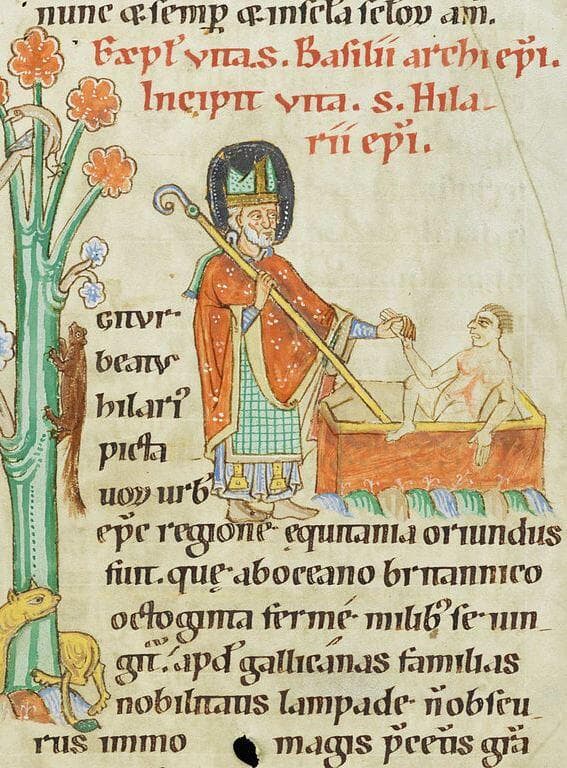
Hilary of Poitiers
Catena Aurea · Johannesevangelium 10
Then the Jews took up stones again to stone him. Jesus answered them, Many good works have I shewed you from my Father; for which of those works do ye stone me? The Jews answered him, saying, For a good work we stone thee not; but for blasphemy; and because that thou, being a man, makest thyself God. Jesus answered them, Is it not written in your law, I said, Ye are gods? If he called them gods, unto whom the word of God came, and the scripture cannot be broken; Say ye of him, whom the Father hath sanctified, and sent into the world, Thou blasphemest; because I said, I am the Son of God? If I do not the works of my Father, believe me not. But if I do, though ye believe not me, believe the works: that ye may know, and believe, that the Father is in me, and I in him.
(vii. de Trin. 26) What place hath adoption, or the mere conception of a name then, that we should not believe Him to be the Son of God by nature, when He tells us to believe Him to be the Son of God, because the Father’s nature shewed itself in Him by His works? A creature is not equal and like to God: no other nature has power comparable to the divine. He declares that He is carrying on not His own work, but the Father’s, lest in the greatness of the works, the nativity of His nature be forgotten. And as under the sacrament1 of the assumption of a human body in the womb of Mary, the Son of God was not discerned, this must be gathered from His work; But if I do, though ye believe not Me, believe the works. Why doththe sacrament of a human birth hinder the understanding of the divine, when the divine birth accomplishes all its work by aid of the human? Then He tells them what they should gather from His works; That ye may know and believe, that the Father is in Me, and I in Him. The same declaration again, I am the Son of God: I and the Father are one.