
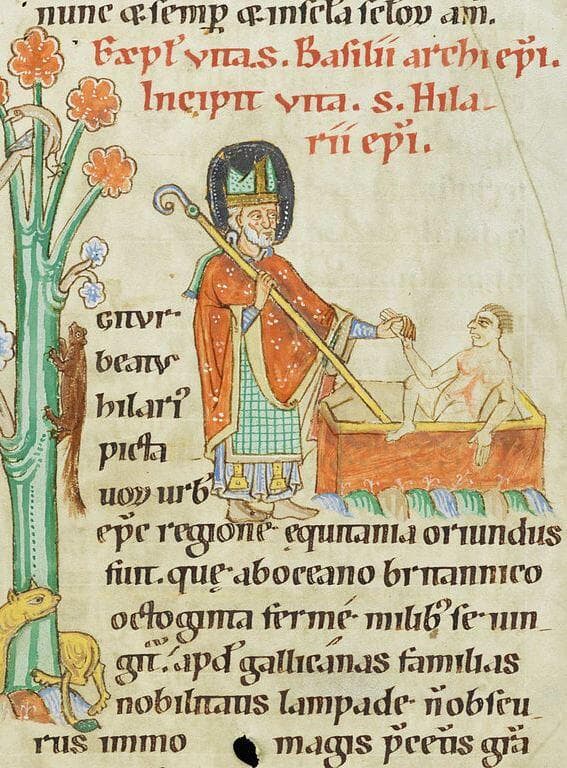
Hilary of Poitiers
Catena Aurea · Johannesevangelium 10
Then the Jews took up stones again to stone him. Jesus answered them, Many good works have I shewed you from my Father; for which of those works do ye stone me? The Jews answered him, saying, For a good work we stone thee not; but for blasphemy; and because that thou, being a man, makest thyself God. Jesus answered them, Is it not written in your law, I said, Ye are gods? If he called them gods, unto whom the word of God came, and the scripture cannot be broken; Say ye of him, whom the Father hath sanctified, and sent into the world, Thou blasphemest; because I said, I am the Son of God? If I do not the works of my Father, believe me not. But if I do, though ye believe not me, believe the works: that ye may know, and believe, that the Father is in me, and I in him.
(vii. de Trin. c. 24) Before proving that He and His Father are one, He answers the absurd and foolish charge brought against Him, that He being man made Himself God. When the Law applied this title to holy men, and the indelible word of God sanctioned this use of the incommunicable name, it could not be a crime in Him, even though He were man, to make Himself God. The Law called those who were mere men, gods; and if any man could bear the name religiously, and without arrogance, surely that man could, who was sanctified by the Father, in a sense in which none else is sanctified to the Sonship; as the blessed Paul saith, Declared1 to be the Son of God with power, according to the Spirit of holiness. (Rom. 1:4) For all this reply refers to Himself as man; the Son of God being also the Son of man.