
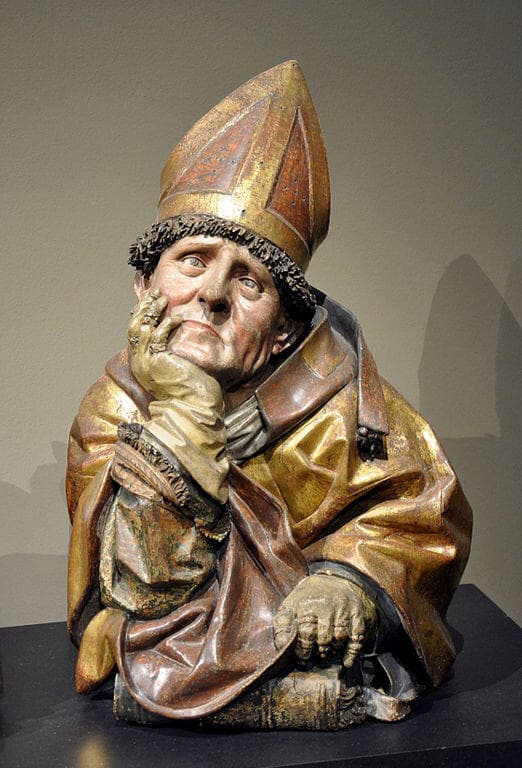
Augustine of Hippo
Catena Aurea · Johannesevangelium 10
And it was at Jerusalem the feast of the dedication, and it was winter. And Jesus walked in the temple in Solomon’s porch. Then came the Jews round about him, and said unto him, How long dost thou make us to doubt? If thou be the Christ, tell us plainly, Jesus answered them, I told you, and ye believed not: the works that I do in my Father’s name, they bear witness of me. But ye believe not, because ye are not of my sheep, as I said unto you. My sheep hear my voice, and I know them, and they follow me. And I give unto them eternal life; and they shall never perish, neither shall any man pluck them out of my hand. My Father, which gave them me, is greater than all; and no man is able to pluck them out of my Father’s hand. I and my Father are one.
(Tract. xlviii) The Son, born from ever lasting of the Father, God from God, has not equality with the Father by growth, but by birth. This is that greater than all which the Father gave Himb; viz. to be His Word, to be His Only-Begotten Son, to be the brightness of His light. Wherefore no man taketh His sheep out of His hand, any more than from His Father’s hand: And no man is able to pluck them out of My Father’s hand. If by hand we understand power, the power of the Father and the Son is one, even as Their divinity is one. If we understand the Son, the Son is the hand of the Father, not in a bodily sense, as if God the Father had limbs, but as being He by Whom all things were made. Men often call other men hands, when they make use of them for any purpose. And sometimes a man’s work is itself called his hand, because made by his hand; as when a man is said to know his own hand, when he recognises his own handwriting. In this place, however, hand signifies power. If we take it for Son, we shall be in danger of imagining that if the Father has a hand, and that hand is His Son, the Son must have a Son too.