
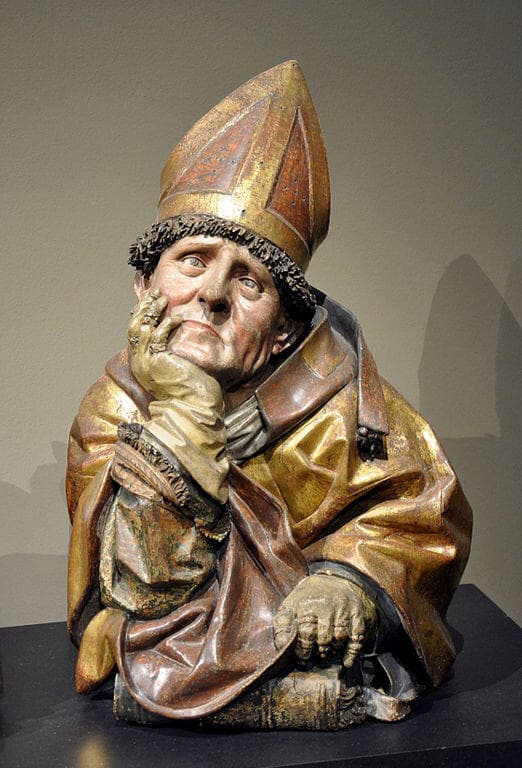
Augustine of Hippo
Catena Aurea · Johannesevangelium 10
I am the good shepherd, and know my sheep, and am known of mine. As the Father knoweth me, even so know I the Father: and I lay down my life for the sheep. And other sheep I have, which are not of this fold: them also I must bring, and they shall hear my voice; and there shall be one fold, and one shepherd. Therefore doth my Father love me, because I lay down my life, that I might take it again. No man taketh it from me, but I lay it down of myself. I have power to lay it down, and I have power to take it again. This commandment have I received of my Father. There was a division therefore again among the Jews for these sayings. And many of them said, He hath a devil, and is mad; why hear ye him? Others said, These are not the words of him that hath a devil. Can a devil open the eyes of the blind?
(Tr. xlvii) How doth our Lord lay down His own life? Christ is the Word, and man, i. e. in soul and body. Doth the Word lay down His life, and take it again; or doth the human soul, or doth the flesh? If it was the Word of God that laid down His soul1 and took it again, that soul was at one time separated from the Word. But, though death separated the soul and body, death could not separate the Word and the soul. It is still more absurd to say that the soul laid down itself; if it could not be separated from the Word, how could it be from itself? The flesh therefore layeth down its life and taketh it again, not by its own power, but by the power of the Word which dwelleth in it. This refutes the Apollinarians, who say that Christ had not a human, rational soul.